
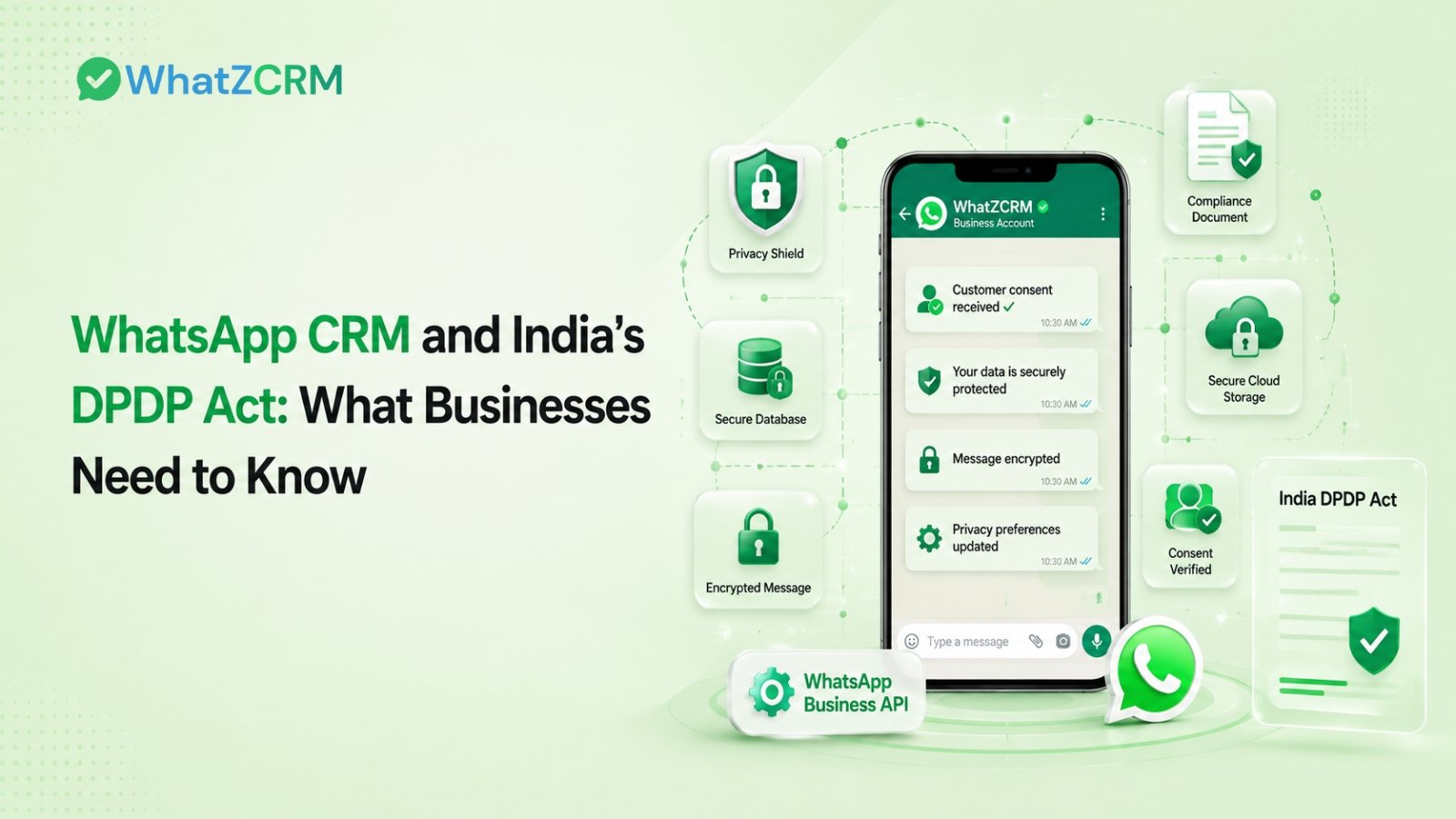

WhatsApp has become one of the most powerful customer communication channels for businesses in India. From eCommerce brands and real estate companies to healthcare providers and educational institutions, businesses rely on WhatsApp Business to generate leads, provide support, send updates, and drive sales.
However, as businesses increase their use of WhatsApp, data privacy has become a critical responsibility. India’s Digital Personal Data Protection (DPDP) Act introduces stronger requirements around collecting, processing, storing, and using customer data. Businesses using WhatsApp for marketing and customer engagement must ensure that their communication practices are transparent, consent-driven, and secure.
This is where a WhatsApp CRM becomes important, helping businesses manage customer conversations while maintaining better control over customer data and communication workflows.
Table of Contents
ToggleWhat Is India’s DPDP Act and Why Does It Matter for WhatsApp Businesses?
India’s DPDP Act establishes rules for organizations that collect and process digital personal data. Businesses handling customer phone numbers, names, purchase details, preferences, and conversation history must ensure responsible data management.
For companies using WhatsApp Business in India, this means:
- Collecting customer consent before sending promotional messages
- Clearly communicating how customer data is used
- Allowing customers to withdraw consent
- Protecting customer information from unauthorized access
- Maintaining transparency throughout the customer journey
WhatsApp marketing is no longer just about sending bulk messages. Businesses need structured processes to ensure every communication is relevant, permission-based, and compliant.
How WhatsApp CRM Helps Businesses Achieve DPDP Compliance
A traditional WhatsApp account does not provide enough control for growing businesses. Teams often manage customer numbers through spreadsheets, personal devices, or disconnected tools, creating privacy and operational risks.
A WhatsApp CRM provides a centralized platform for businesses to efficiently manage customer conversations, consent records, campaigns, and customer information.
1. Consent-Based WhatsApp Marketing
Consent is one of the most important requirements under the DPDP framework.
With WhatsApp CRM, businesses can:
- Capture customer opt-ins through forms, websites, and WhatsApp interactions
- Maintain customer consent records
- Segment customers based on preferences
- Send relevant marketing communication
This helps businesses move from random messaging to permission-based WhatsApp marketing.
Also Read: Key Benefits of WhatsApp Marketing in 2026
2. Secure Customer Data Management
Customer phone numbers and conversations are valuable business data.
A WhatsApp CRM helps businesses:
- Store customer information securely
- Control employee access through role-based permissions
- Track communication history
- Maintain accountability for customer interactions
Instead of customer data being scattered across multiple employee devices, businesses get a controlled communication environment.
3. Better Control Over WhatsApp Campaigns
Many businesses use WhatsApp broadcasts to promote offers, updates, and announcements. However, sending irrelevant or unwanted messages can damage customer trust.
A WhatsApp CRM enables businesses to:
- Create targeted customer segments
- Send personalized campaigns
- Monitor delivery and engagement
- Manage customer preferences
This improves campaign performance while supporting responsible WhatsApp marketing practices.
Also Read: WhatsApp Broadcast vs WhatsApp Group: Key Differences (2026)
4. Managing Customer Requests and Data Preferences
Customers increasingly expect control over their personal information.
Businesses should be prepared to handle requests related to:
- Updating customer details
- Removing customer information
- Stopping promotional communication
- Managing communication preferences
A CRM-based WhatsApp system makes these processes easier by maintaining organized customer records.
Why Businesses Should Move Beyond Basic WhatsApp Business
While WhatsApp Business in India helps small businesses communicate with customers, growing organizations need advanced capabilities.
A WhatsApp CRM combines:
- WhatsApp Business API integration
- Customer relationship management
- AI-powered chat automation
- Lead tracking
- Campaign management
- Team collaboration
- Analytics
This allows businesses to use WhatsApp not only as a messaging platform but as a complete customer engagement system.
Final Thoughts
India’s DPDP Act is changing how businesses approach customer communication. Companies using WhatsApp for sales, marketing, and support must prioritize consent management, secure data handling, and responsible messaging.
A modern WhatsApp CRM helps businesses achieve this balance by bringing customer conversations, automation, and compliance practices into one platform.
For businesses looking to scale WhatsApp marketing while preparing for India’s evolving privacy landscape, investing in the right CRM infrastructure is becoming essential.