
Key Takeaways
- Conversation-Based Pricing was Meta’s original billing model.
- In 2026, WhatsApp pricing primarily revolves around Template Message Pricing.
- Businesses are generally charged for delivered business-initiated template messages.
- Customer replies open a 24-hour service window where businesses can continue conversations without requiring templates.
- Marketing, Utility, and Authentication templates serve different business purposes.
- Meta messaging charges and WhatsApp CRM subscription fees are separate.
- Understanding the pricing model helps businesses improve ROI and manage communication costs effectively.
If you’ve recently started exploring the WhatsApp Business API, you’ve probably searched for WhatsApp Conversation-Based Pricing. However, one of the biggest sources of confusion in 2026 is that Meta has significantly changed how businesses are billed.
Many blogs still explain the old conversation-based model, while Meta’s current pricing primarily revolves around Template Message Pricing. Understanding this change is essential for accurately estimating messaging costs, choosing the right WhatsApp CRM, and planning your customer communication strategy.
In this guide, we’ll explain how WhatsApp pricing has evolved, how the current pricing model works, and how businesses can optimize their messaging costs.
What Was WhatsApp Conversation-Based Pricing?
Conversation-Based Pricing was Meta’s original billing model for the WhatsApp Business Platform.
Instead of charging businesses for every message sent, Meta charged based on conversations. A conversation was a 24-hour messaging session between a business and a customer.
For example, if a customer contacted your business and both parties exchanged multiple messages within 24 hours, Meta treated it as one conversation instead of billing each message.
This model made customer support more predictable, especially for businesses handling multiple customer queries.
4 Types of WhatsApp Conversations Works Every for Business
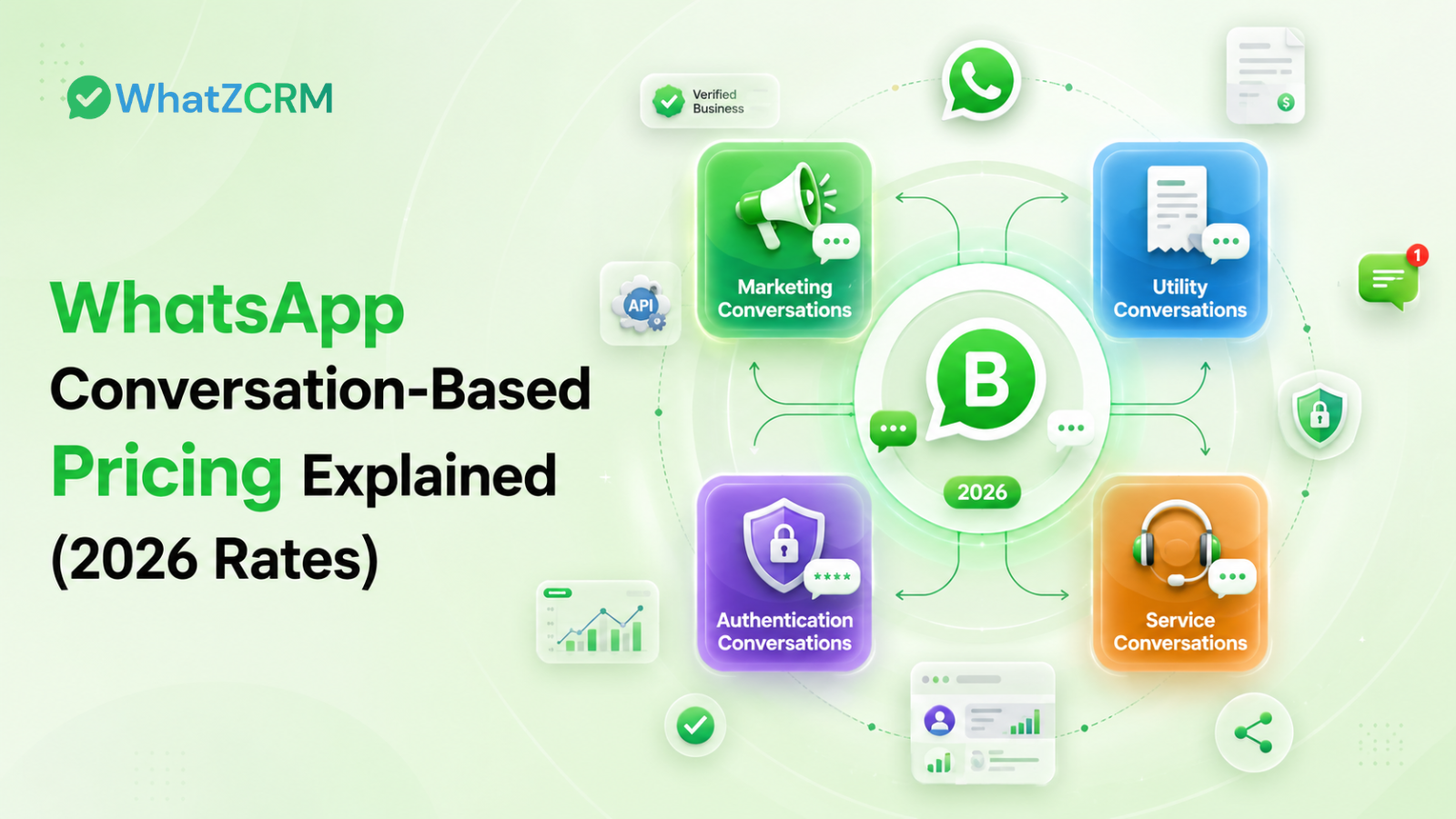
Under the previous pricing model, Meta categorized conversations into four different types.
1. Marketing Conversations
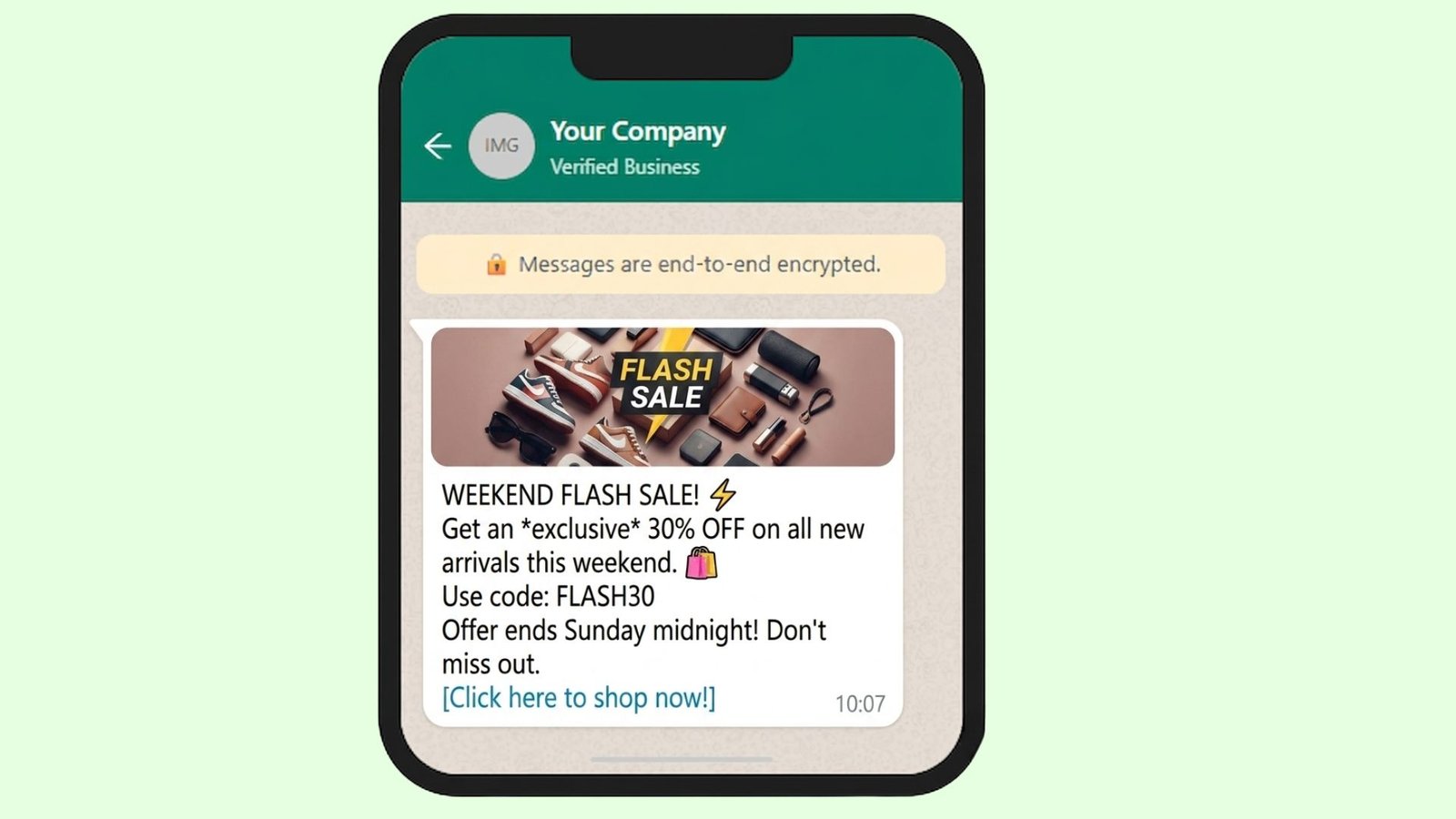
Marketing conversations included WhatsApp promotional messages designed to generate sales or customer engagement.
Examples include:
- Product launches
- Discount offers
- Festival promotions
- Flash sales
- Limited-time deals
Example: “Get 30% OFF on all products this weekend. Shop now!”
2. Utility Conversations
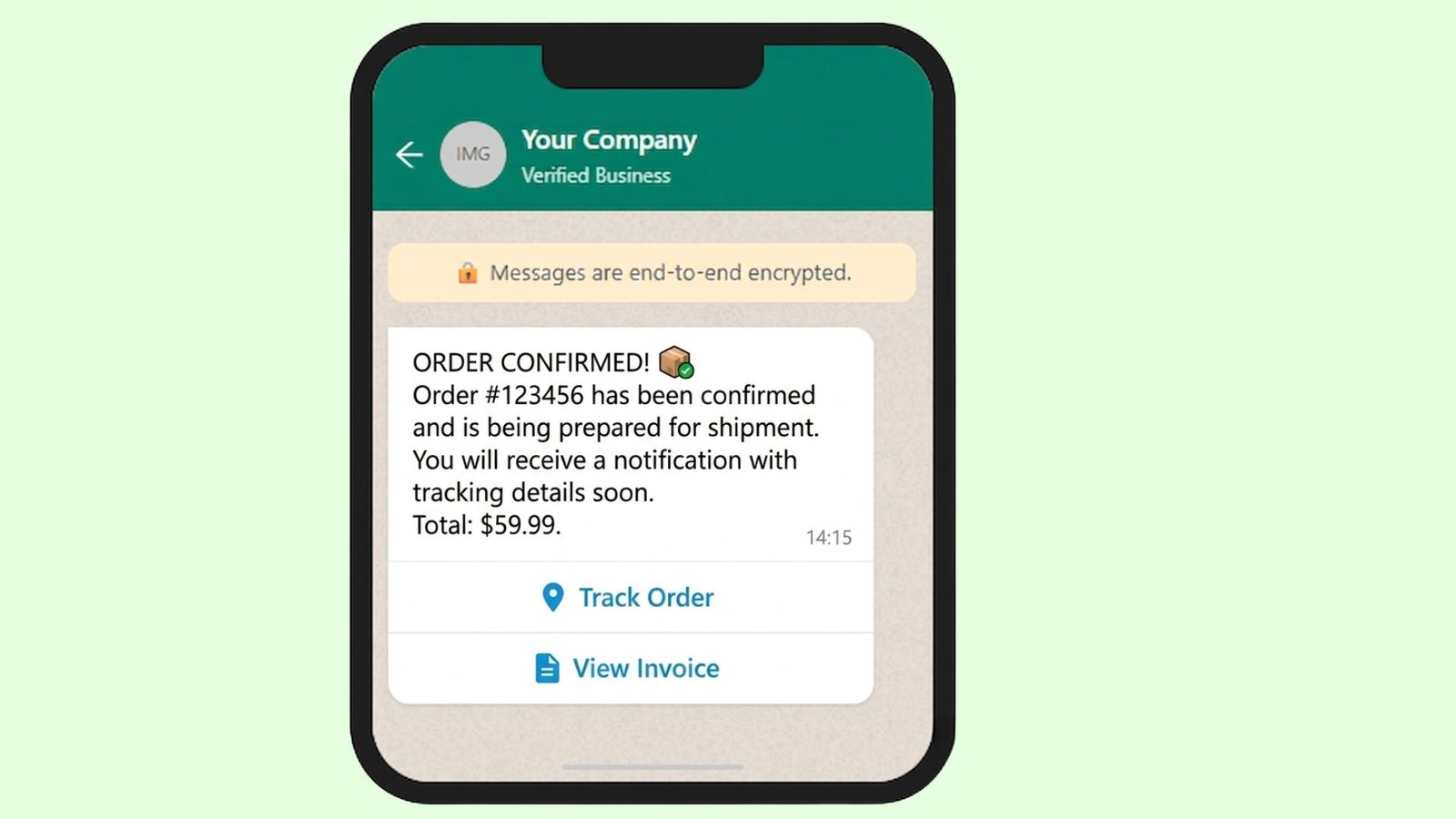
Utility conversations deliver important updates related to customer transactions.
Examples include:
- Order confirmations
- Shipping updates
- Delivery notifications
- Payment receipts
- Appointment reminders
Example: “Your order has been shipped and will arrive tomorrow.”
3. Authentication Conversations
Authentication conversations focus on account verification and security.
Examples include:
- OTP verification
- Login confirmation
- Password reset codes
- Two-factor authentication
Example: “Your verification code is 684291.”
4. Service Conversations
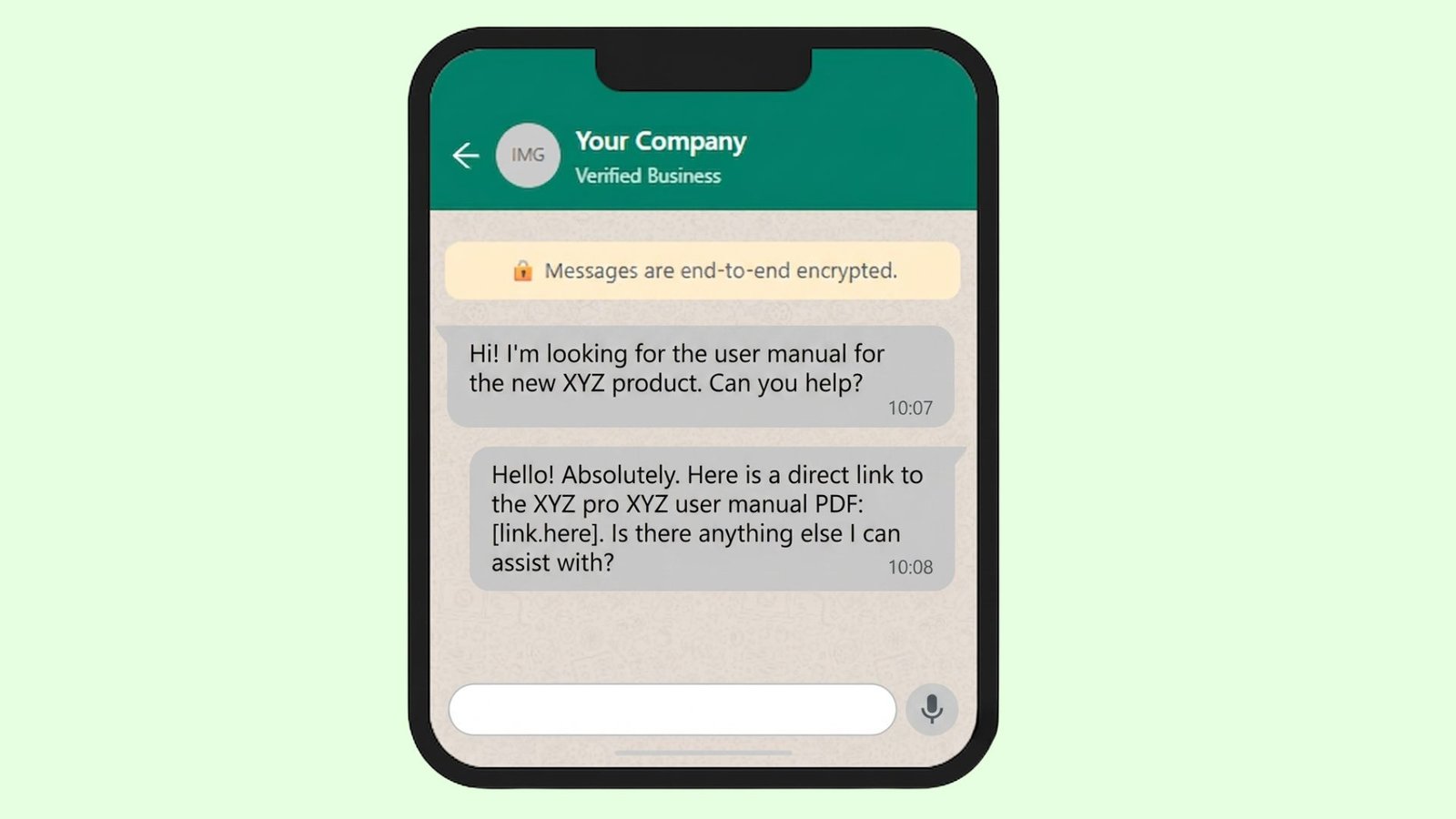
Service conversations occurred when the customer initiated the conversation by sending the first message.
Examples include:
- Product inquiries
- Support requests
- Complaint resolution
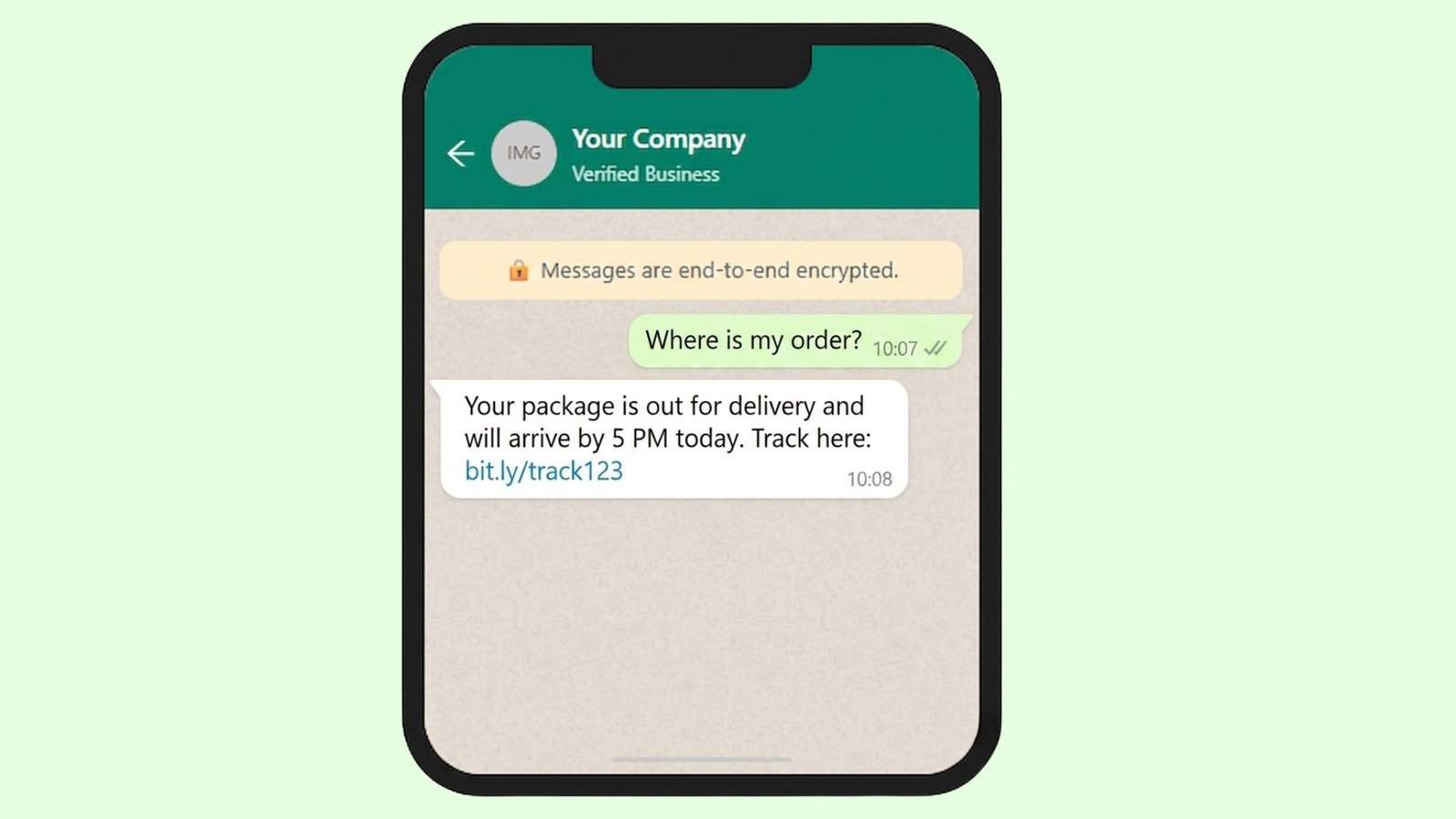
- Order tracking
Example:
Customer: “Where is my order?”
Business: “Your package will be delivered tomorrow.”
Why Meta Changed the Pricing Model in 2026?
As WhatsApp Business adoption increased worldwide, businesses requested a simpler and more transparent billing structure.
The conversation-based model was often confusing because businesses needed to understand:
- Conversation categories
- Conversation windows
- Billing overlaps
- Category transitions
To simplify billing, Meta introduced WhatsApp Template Message Pricing, where businesses are primarily charged for delivered business-initiated template messages instead of entire conversations.
Also Read: Top 15 Ready-to-Use WhatsApp Templates for Automation
Updated WhatsApp Pricing Model in 2026
In 2026, WhatsApp pricing works differently from the original conversation-based model.
Today, businesses are generally charged when they send approved template messages outside the customer service window.
This means pricing is primarily based on:
- Template category
- Customer’s country
- Successfully delivered template messages
Rather than asking: “How much does one conversation cost?”
Businesses now ask: “How much does each template message cost?”
This is an important shift in understanding WhatsApp Business API billing.
Also Read: Types of WhatsApp Message Templates: Explained in Detail
The 24-Hour Customer Service Window
One of the most important concepts in WhatsApp Business API is the 24-hour Customer Service Window.
Here’s how it works:
- A customer sends a message to your business.
- A 24-hour service window opens.
- During this period, your business can respond using free-form messages without requiring approved templates.
- Once the window expires, businesses must use approved template messages to re-engage customers.
This helps businesses provide natural customer support while ensuring promotional outreach follows Meta’s policies.
How WhatsApp Charges Work in 2026 (Updated)
Let’s look at a simple example. Suppose an eCommerce company wants to send a promotional campaign to 10,000 customers.
- 10,000 approved marketing templates are sent.
- 9,500 are successfully delivered.
- Charges apply based on the delivered template messages and the applicable country-specific rates.
If 2,000 customers reply, the business can continue chatting with those customers within the 24-hour service window without needing additional template messages.
Meta Charges vs WhatsApp CRM Charges
Many businesses mistakenly believe that Meta charges include their CRM subscription. In reality, these are separate costs.
Charge Type | Paid To | Covers | Billing |
Meta API charges | Meta (via your BSP) | Message delivery, by category & country | Usage-based |
CRM subscription | Provider (e.g., WhatZCRM) | Inbox, automation, chatbot, CRM, integrations | Flat monthly/annual |
Understanding this distinction helps businesses budget more accurately.
Factors That Affect WhatsApp Pricing
Several factors influence your WhatsApp Business API costs.
- Customer’s Country: Pricing varies depending on the recipient’s country.
- Template Category: Marketing, Utility, and Authentication templates may have different pricing structures.
- Message Delivery: Charges generally apply to successfully delivered template messages.
- Customer-Initiated Conversations: Customer replies allow businesses to continue conversations during the customer service window.
- CRM Provider: Your WhatsApp CRM subscription is separate from Meta’s messaging charges.
How to Reduce WhatsApp Messaging Costs
Businesses can optimize their WhatsApp expenses with a few best practices.
- Encourage customers to reply naturally.
- Make full use of the 24-hour customer service window.
- Send marketing templates only to relevant audiences.
- Keep customer databases clean.
- Track campaign delivery performance.
- Use automation to reduce manual follow-ups.
- Monitor messaging analytics regularly.
A well-planned messaging strategy often reduces costs while improving engagement.
Conclusion
WhatsApp Business API pricing has evolved significantly over the past few years. While many businesses still search for Conversation-Based Pricing, the current model focuses largely on Template Message Pricing, making billing more transparent and predictable.
Understanding how template categories, customer service windows, and Meta’s billing structure work allows businesses to plan campaigns more effectively and avoid unnecessary messaging costs.
If your organization relies on WhatsApp for sales, marketing, or customer support, using a WhatsApp CRM like WhatZCRM can simplify template management, automate customer communication, monitor messaging usage, and help your team deliver faster, more consistent customer experiences.