

Wondering how to use WhatsApp for business and drive real revenue?
WhatsApp has become one of the most powerful tools for business communication. With billions of users and extraordinary engagement rates, businesses of all sizes are now using WhatsApp not just to chat, but to sell, support, and automate at scale.
In this 2026 guide, we’ll walk you through everything from the basics of WhatsApp Business to advanced automation with WhatZCRM, the best WhatsApp CRM platform that helps you turn conversations into customers.
Why WhatsApp Is a Top Business Channel in 2026
WhatsApp gives businesses something powerful: direct access to their customers’ primary messaging app. There’s no algorithm filtering visibility. No inbox clutter like email. Just immediate communication.
Compared to traditional email or SMS marketing, WhatsApp delivers significantly higher engagement. Messages are opened faster, replies are more frequent, and conversations feel personal rather than promotional.
Customer behavior has shifted. People now prefer messaging over phone calls and long email threads. Whether it’s asking about pricing, checking order status, or booking appointments, chat feels easier.
Beyond simple messaging, WhatsApp has evolved into a revenue channel. With WhatsApp API and CRM integrations, businesses can automate responses, run campaigns, manage pipelines, and track conversions all inside a single ecosystem.
WhatsApp Business vs WhatsApp Business API
Before building your strategy, it’s important to understand the difference between the basic app and the API.
The WhatsApp Business App is designed for small businesses. It allows you to create a profile, send quick replies, use labels, and broadcast messages to limited contacts. Setup is simple and works well for low-volume messaging.
However, it has limitations. It supports limited device access, manual workflows, and capped broadcast capabilities. As message volume increases, managing conversations becomes difficult.
WhatsApp Business API is built for scale. It enables multi-agent access, automation, CRM integration, chatbot workflows, and campaign tracking. Businesses handling higher volumes or running marketing campaigns need this level of infrastructure.
This is where CRM integration becomes crucial. Instead of treating WhatsApp as a standalone app, it becomes part of a larger customer management system.
Also Read: The Complete Business Guide for WhatsApp Business API
Step-by-Step: Getting Started with WhatsApp Business
Step 1: Create Your Business Profile
Download WhatsApp Business and set up your profile by adding your company name, logo, description, address, website, and working hours. A complete profile builds instant trust and credibility.
Step 2: Set Up Quick Replies
Create ready-made responses for FAQs, pricing questions, support queries, and order confirmations. This helps you respond faster and maintain consistent communication.
Step 3: Organize Chats with Labels
Use labels like New Lead, Hot Prospect, Follow-up, Paid Customer, and Support Case to manage conversations. For larger volumes, consider CRM automation to avoid manual chaos.
Step 4: Add Click-to-WhatsApp Entry Points
Drive traffic from your website, Instagram bio, Facebook & Google Ads, and email signature.
More entry points mean more conversations and more sales opportunities.
WhatsApp for Business Trends for 2026
WhatsApp is evolving from a simple messaging app into a powerful channel for business growth. In 2026, the focus is on smarter conversations, better personalization, and deeper integrations.
The future of WhatsApp marketing includes:
- AI-Led Conversations: Bots now understand context, not just keywords.
- Conversational Commerce: Customers browse, ask, and purchase inside WhatsApp.
- Deep CRM Integration: Chats become structured pipeline events.
- Omnichannel Sync: WhatsApp + Email + Ads + CRM unified in one ecosystem.
Also Read: 7 WhatsApp Marketing Trends That Businesses Can’t Ignore in 2026
What Do We Know About WhatZCRM?
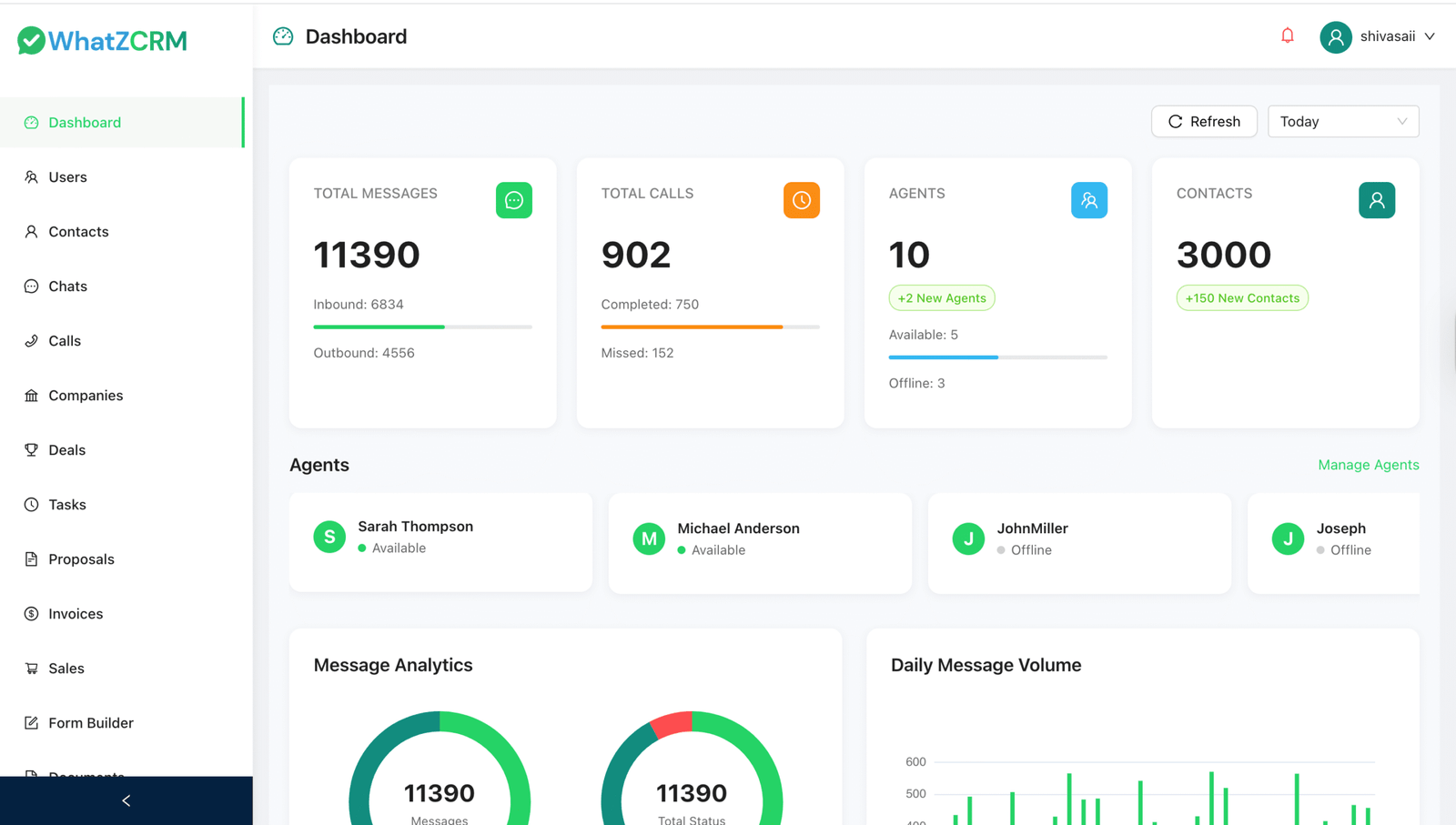
WhatZCRM is a WhatsApp-first CRM that turns everyday conversations into structured business workflows. Instead of managing scattered chats, businesses can centralize communication, automate processes, and track performance on a single unified platform.
Below is a quick overview of the core features that help businesses scale efficiently.
1. Unified WhatsApp Inbox
WhatZCRM provides a centralized dashboard for managing all WhatsApp conversations in one place. Multiple agents and departments can collaborate seamlessly without switching devices or losing context.
2. Built-In CRM & Contact Management
Every incoming chat is automatically converted into a CRM contact with complete conversation history. Teams can view customer profiles, add notes, and track interactions without manual data entry.
3. Automation & AI Chatbots
Smart automation handles greetings, lead capture, and instant replies 24/7. AI-powered workflows can qualify leads and automatically route conversations to the right team member.
4. WhatsApp Campaigns & Broadcasts
Segment your contacts and send personalized campaigns directly through WhatsApp. Track message delivery, engagement, and responses to measure campaign effectiveness.
5. Sales & Pipeline Tools
Manage deals, assign tasks, set follow-up reminders, and move leads across pipeline stages. Sales teams can even send proposals and invoices directly within the WhatsApp CRM workflow.
6. Analytics & Reporting
Access real-time dashboards showing response times, engagement rates, and conversion metrics. Data-driven insights help optimize team performance and campaign results.
7. Multi-Department & Role-Based Access
Scale your operations by assigning role-based permissions to sales, marketing, and support teams. Conversations can be routed automatically to the appropriate department for faster resolution.
8. Email Marketing
WhatZCRM connects WhatsApp conversations to email workflows, allowing teams to manage multi-channel communication from a single platform. This ensures consistent follow-ups and better customer tracking.
9. WhatsApp Forms
Capture leads directly inside WhatsApp using interactive forms and automated question flows. Collect structured data such as contact details, preferences, and requirements without redirecting users to external pages.
Also Read: How WhatZCRM Helps Businesses Drive Sales Growth in 2026
WhatsApp Messaging Rules You Must Follow
WhatsApp has strict guidelines to prevent spam. You can message customers freely only within a 24-hour window from their last message.
Beyond that, you must use approved message templates to send outbound messages.
Most platforms, including WhatZCRM, provide tools to create and manage these templates, helping you stay compliant.
Always make sure users opt in before sending promotional messages. This protects your account and boosts engagement.
Following the rules ensures your messages reach customers and don’t get blocked.
To Conclude
WhatsApp gives you direct access to customers in a way no other platform does. Used right, it can improve sales, automate support, and build loyalty.
But to truly grow, you need more than a basic app. You need structure, automation, analytics, and pipeline workflows, and that’s exactly what WhatZCRM provides.
Use WhatsApp to start conversations. Use WhatZCRM to close them.
Start simple. Scale smart. Win more customers.