

WhatsApp marketing to reach more customers, generate qualified leads, and increase sales? Whether you run a small business, an eCommerce store, or a B2B company, WhatsApp offers a direct way to connect with customers through personalized messages, automated follow-ups, and targeted campaigns.
With more than 3 billion people using WhatsApp across 180+ countries, according to Meta, businesses have an opportunity to connect with customers on a platform they already use daily.
However, successful WhatsApp marketing requires more than sending promotional messages. You need the right tools, customer permission, relevant content, and a measurable strategy.
This guide explains how to start WhatsApp marketing, run effective campaigns, automate conversations, and manage leads using solutions like WhatZCRM.
What Is WhatsApp Marketing and How Does It Work?
WhatsApp marketing is a strategy businesses use to reach potential and existing customers through promotional messages, targeted campaigns, personalized offers, and automated communication on WhatsApp. It helps businesses generate leads, promote products or services, nurture prospects, and encourage repeat purchases.
Businesses can conduct basic marketing activities through the WhatsApp Business App or use the WhatsApp Business API with a platform like WhatZCRM to manage larger campaigns, automate follow-ups, and track customer interactions.
How Does WhatsApp Marketing Work?
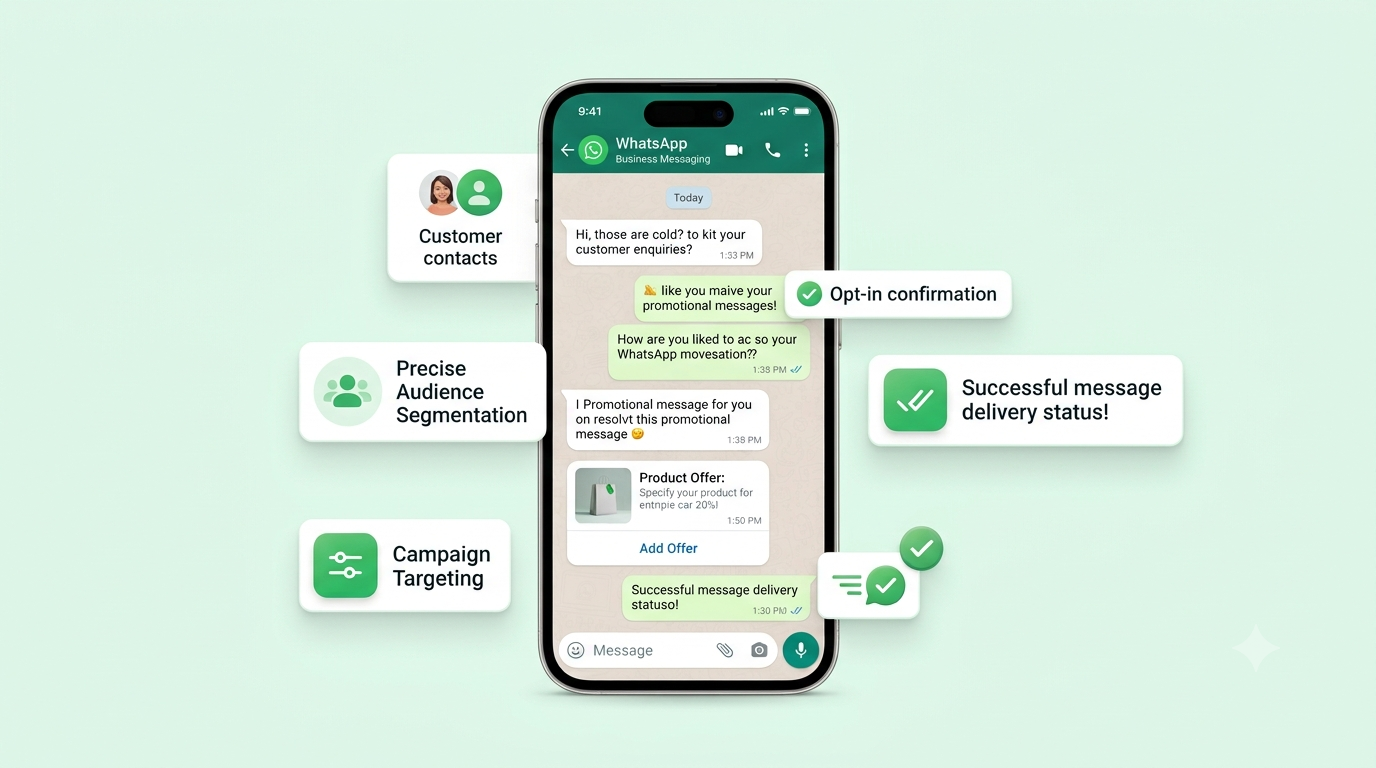
WhatsApp marketing typically follows a simple process:
- Build a customer contact list: Collect WhatsApp numbers from customers who have opted in to receive business messages.
- Segment your audience: Group contacts based on interests, purchase history, location, or customer journey.
- Create marketing campaigns: Prepare personalized messages featuring offers, product launches, updates, or promotional announcements.
- Send WhatsApp messages: Use approved message templates through the WhatsApp Business API to reach your target audience.
- Automate customer engagement: Set up chatbots, automatic responses, and follow-up workflows to manage enquiries.
- Track campaign performance: Measure message delivery, customer responses, leads, and conversions to optimize future campaigns.
For example, an educational institute can use WhatsApp marketing to promote new course admissions, share program details with interested students, and automate enquiry follow-ups. Similarly, a B2B company can use WhatsApp campaigns to reconnect with opted-in prospects, promote webinars, and schedule product demonstrations.
With WhatZCRM, businesses can bring WhatsApp marketing campaigns, lead management, customer conversations, and automation together without requiring a separate CRM system.
Also Read: How Automated WhatsApp Campaigns Increased Engagement by 70%
How to Do WhatsApp Marketing in 7 Simple Steps
Getting started with WhatsApp marketing doesn’t have to be complicated. Follow these seven steps to build a structured campaign.
Step 1: Set Up WhatsApp Business
Start by creating a WhatsApp Business profile with your company name, logo, business description, contact information, and website.
Small businesses handling limited enquiries can begin with the WhatsApp Business App.
However, businesses requiring campaign automation, multi-agent communication, and advanced lead management should consider the WhatsApp Business API.
Step 2: Choose a WhatsApp Marketing Platform
The WhatsApp Business API provides the messaging infrastructure, but businesses typically need software to manage campaigns and customer conversations.
Platforms like WhatZCRM combine WhatsApp Business API integration, broadcast campaigns, automation, and built-in lead management.
This allows teams to manage customer conversations without relying on multiple disconnected tools.
Step 3: Build an Opt-In Contact List
A successful WhatsApp marketing strategy starts with customers who have agreed to receive your messages.
Collect WhatsApp opt-ins through:
- Website enquiry forms and landing pages
- Checkout pages and customer registrations
- QR codes displayed in stores or at events
- Lead generation campaigns and subscription forms
Clearly explain what messages customers will receive.
According to WhatsApp’s Business Messaging Policy, businesses must obtain appropriate permission before contacting people and respect opt-out requests.
Step 4: Segment Your Audience
Sending the same promotional message to every contact rarely delivers the best experience.
Organize your audience based on interests, customer behavior, purchase history, or lead status.
For example, a real estate company could create separate lists for first-time homebuyers, property investors, and commercial property prospects.
With WhatZCRM, businesses can use contact tags and lead stages to organize customers and deliver more relevant campaigns.
Step 5: Create WhatsApp Message Templates
Businesses using the WhatsApp Business API must use approved templates when initiating conversations.
Your marketing messages should include a clear purpose, personalized information, a compelling offer, and an action-oriented CTA.
For example:
Hi Rahul! 👋
Looking to simplify customer communication?
Discover how WhatZCRM helps businesses manage WhatsApp leads, automate follow-ups, and organize customer conversations.
CTA: Book a Free Demo
Keep your messages concise and avoid excessive promotional language.
Step 6: Launch Your WhatsApp Marketing Campaign
Once your audience and templates are ready, schedule your campaign and send approved messages to eligible, opted-in contacts.
Start with a smaller audience segment to understand engagement before scaling.
Avoid sending too many messages or repeatedly contacting customers who show no interest.
Step 7: Track and Improve Campaign Results
Monitor delivery rates, customer responses, link clicks, qualified leads, and conversions.
If a campaign generates conversations but few sales, review the offer, audience targeting, and follow-up process.
Use these insights to improve future campaigns instead of focusing only on the number of messages sent.
Also Read: Types of WhatsApp Message Templates: Explained in Detail
WhatsApp Marketing Strategies for Businesses
Different businesses have different customer journeys. Your WhatsApp marketing strategy should reflect how customers research, enquire, and purchase.
WhatsApp Marketing for B2B Businesses
B2B sales often involve multiple conversations before a decision is made.
WhatsApp can support lead qualification, meeting scheduling, product information sharing, and follow-ups after demonstrations.
Example: A SaaS company captures a lead through a LinkedIn campaign and uses an agreed WhatsApp communication flow to share a product brochure, schedule a demo, and follow up with the prospect.
WhatsApp Marketing for B2C Businesses
Consumer brands can use WhatsApp to promote seasonal offers, share product recommendations, and reconnect with existing buyers.
Example: An eCommerce store sends a personalized reminder to an opted-in customer who abandoned a shopping cart, including a direct link to complete the purchase.
WhatsApp Marketing for Small Businesses
Local shops, salons, educational institutes, and service providers can use WhatsApp to manage enquiries without investing in complicated communication systems.
For example, a coaching institute can automate course enquiries, share admission information, and connect interested students with counsellors.
The goal is to make customer communication convenient, relevant, and timely.
Best WhatsApp Marketing Campaign Examples and Templates
The most effective WhatsApp campaigns solve a specific customer need rather than simply advertising a product.
Promotional Campaign
Hi Priya! 🎉
Our weekend sale is here!
Enjoy 20% off selected products until Sunday.
CTA: Shop Now
B2B Lead Follow-Up
Hi Arjun!
Thanks for your interest in our business solutions.
Would you like to schedule a quick demo to explore how we can help your team?
CTA: Schedule Demo
Customer Re-Engagement
Hi Neha! 👋
It’s been a while since your last visit!
Explore our latest collection, selected especially for returning customers.
CTA: Explore Collection
These are illustrative marketing templates and must be adapted to your business, sent with appropriate consent, and approved where required.
Also Read: Top 15 Ready-to-Use WhatsApp Templates for Automation
How to Automate WhatsApp Marketing With the Business API
As customer enquiries increase, managing every conversation manually becomes time-consuming.
WhatsApp marketing automation helps businesses respond consistently while allowing employees to focus on higher-value conversations.
Automate Lead Qualification
An AI chatbot can collect information such as customer requirements, preferred services, budget, or appointment preferences.
For example, a property developer can automatically ask prospective buyers about their preferred location and property budget before assigning them to a sales representative.
Set Up Automated Follow-Ups
Businesses can create workflows that respond to customer actions, send relevant reminders, and move qualified enquiries through the sales pipeline.
Follow-up messages initiated outside WhatsApp’s customer service window must use approved templates.
Manage Conversations Through a Shared Inbox
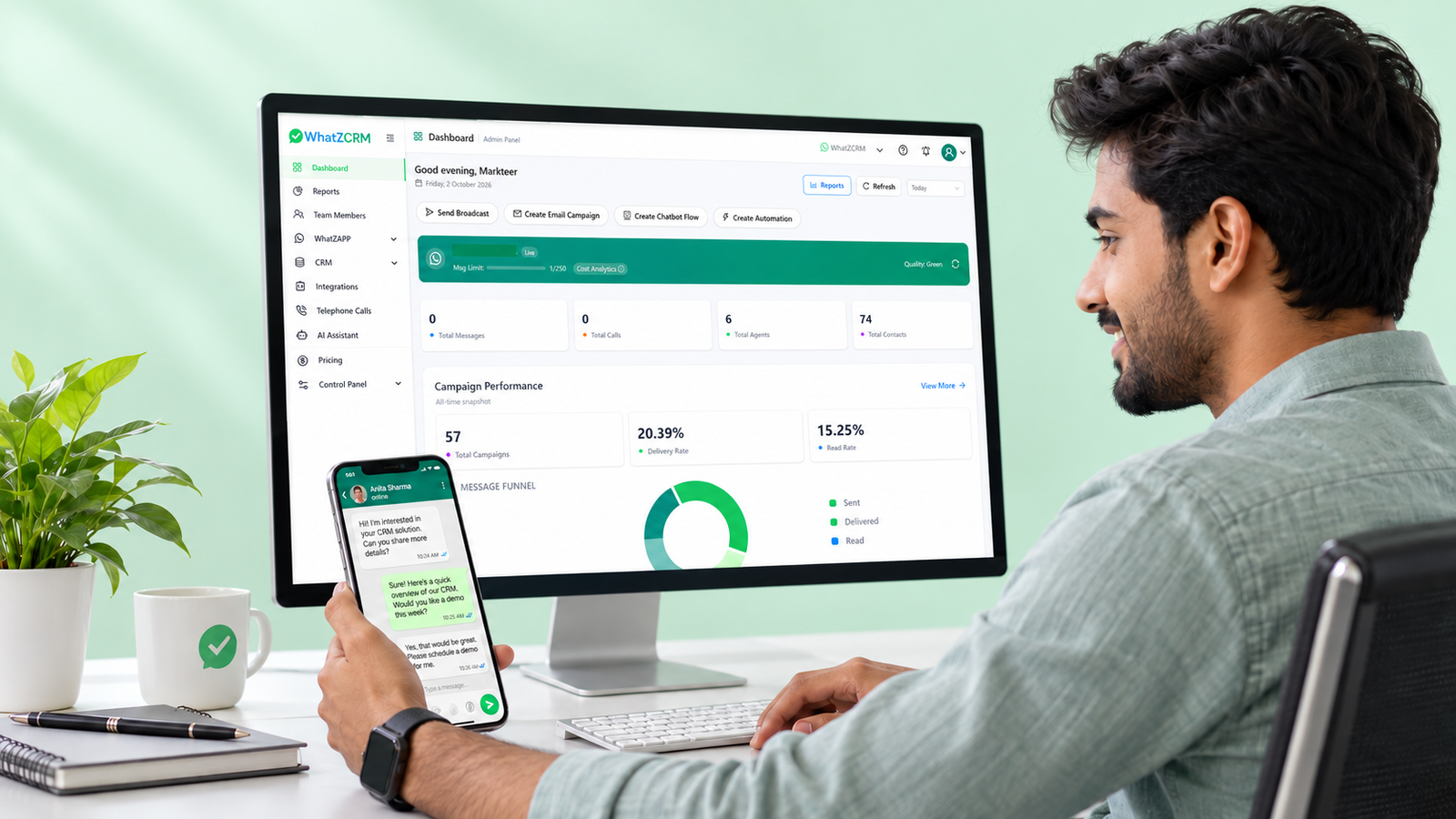
With WhatZCRM’s WhatsApp CRM, businesses can automatically capture leads, assign conversations, track deals, and coordinate responses across sales and support teams.
WhatZCRM also provides AI chatbot capabilities and automated follow-ups, helping businesses reduce repetitive manual tasks.
The biggest advantage is that lead information, conversations, and follow-up activities can remain connected inside one platform.
WhatsApp Marketing Costs, Performance, and Common Mistakes
A good campaign should generate measurable business outcomes, not simply high message volumes.
How Much Does WhatsApp Marketing Cost?
The WhatsApp Business App offers free basic business messaging features.
Businesses using the WhatsApp Business API should account for Meta’s messaging charges and any applicable software subscription fees.
Meta uses a per-message pricing model, with rates varying by message category and recipient market. Businesses should check the latest official WhatsApp Business Platform pricing before budgeting.
Which Metrics Should You Track?
Important campaign metrics include:
- Delivery rate: How many messages reach recipients
- Read rate: How many delivered messages are read, where available
- Response rate: How many recipients interact with your campaign
- Conversion rate: How many complete the desired action
- Return on investment: How much business value a campaign generates compared with its cost
For example, suppose a campaign delivers 1,000 messages and generates 50 qualified leads. That represents a 5% lead conversion rate based on delivered messages.
These are illustrative numbers, not industry benchmarks.
Common WhatsApp Marketing Mistakes to Avoid
Businesses should avoid purchasing contact lists, sending unsolicited bulk messages, overusing generic promotions, ignoring opt-out requests, and failing to follow up with interested leads.
Another common mistake is tracking message delivery without connecting campaigns to actual sales outcomes.
A successful campaign should improve the customer experience and contribute to measurable business growth.
Also Read: WhatsApp Business API Pricing in 2026: A Country-by-Country Cost Breakdown
How WhatZCRM Makes WhatsApp Marketing Easier
Managing campaigns, customer enquiries, sales conversations, and follow-ups through separate tools can create unnecessary work.
WhatZCRM is a WhatsApp CRM and marketing automation platform that brings these activities into one connected system.
What Can Businesses Do With WhatZCRM?
- WhatsApp Business API: Manage business messaging through the official API.
- Broadcast Campaigns: Send personalized campaigns to opted-in contacts.
- Built-In CRM: Capture, organize, and manage leads without requiring a separate CRM.
- AI Chatbot: Automate FAQs, lead qualification, and customer enquiries.
- Automated Follow-Ups: Create workflows based on customer actions and lead stages.
- Shared Team Inbox: Assign conversations across sales and support teams.
- Analytics: Monitor campaign engagement and team performance.
For example, when a potential customer enquires through a Facebook advertisement, WhatZCRM can capture the lead, initiate a relevant response, help qualify the prospect, and route the conversation to a salesperson.
Instead of treating WhatsApp as a standalone messaging app, businesses can use WhatZCRM to connect marketing, sales, and customer communication.
Conclusion:
Understanding how to do WhatsApp marketing is the first step toward building stronger customer relationships and creating new sales opportunities.
From building an opt-in audience and creating targeted campaigns to automating conversations and tracking results, every stage contributes to a more effective marketing strategy.
For businesses looking to simplify the process, WhatZCRM combines WhatsApp marketing, CRM, automation, and lead management in one platform, helping teams manage conversations more efficiently.
Ready to turn WhatsApp conversations into qualified leads and sales opportunities?