

In 2026, WhatsApp is no longer just a messaging app; it has become one of the most powerful customer engagement channels for businesses worldwide. With billions of active users and unmatched open rates, brands are using WhatsApp to generate leads, nurture prospects, automate follow-ups, and increase sales.
If you’re exploring what are the benefits of WhatsApp marketing, how it works, and whether it’s better than traditional channels like email, this guide will give you a complete, strategy-driven answer.
We’ll also cover WhatsApp marketing strategy 2026, emerging trends, and best practices to help you rank higher in Google and perform better in AI-driven search results.
What Is WhatsApp Marketing?
WhatsApp Marketing involves using the WhatsApp platform for business promotion and customer engagement. It leverages the app’s messaging features to deliver personalized, two-way conversations that drive sales and loyalty.
- Promotional campaigns
- Product updates
- Customer support
- Reminders and automated follow-ups
Unlike traditional advertising, WhatsApp marketing is conversation-based and permission-driven. Businesses interact directly with customers in a private chat environment, creating a more personal and engaging experience.
- Regular WhatsApp usage is manual, limited, and not designed for scale.
- WhatsApp Business API with CRM integration enables automation, team collaboration, performance tracking, and structured campaigns.
This distinction is important when building a long-term WhatsApp marketing strategy in 2026.
Also Read: Top 10 WhatsApp CRM Tools Compared (2026)
How WhatsApp Marketing Works
Start with a WhatsApp Business account, get opt-ins, then use templates for broadcasts or API for scale. Compliance with policies ensures deliverability.
10 Benefits of WhatsApp Marketing for Every Business
Here are the 10 major benefits of WhatsApp marketing that make it one of the most effective digital channels in 2026.
1. Exceptional Open Rates
WhatsApp messages typically achieve open rates above 90%, far higher than email marketing. Since notifications appear directly on a user’s phone, messages are seen almost instantly.
This makes WhatsApp one of the most reliable channels for urgent updates, promotions, and time-sensitive campaigns.
2. Real-Time Customer Engagement
One of the biggest advantages of using WhatsApp is real-time communication. Customers can ask questions and get immediate responses.
This is especially valuable for:
- E-commerce support
- Service bookings
- Lead qualification
- Post-sale assistance
Real-time messaging increases trust and reduces purchase hesitation.
3. Personalized Communication at Scale
With WhatsApp Business API and CRM integration, businesses can send personalized messages using customer names, purchase history, and behavioral triggers.
🚀 Pro Tip
Personalized WhatsApp messages triggered by user actions (like cart abandonment or inquiry responses) can dramatically increase engagement and conversion rates.
Personalization increases engagement and improves conversion rates significantly compared to generic bulk messages.
Also Read: How WhatsApp API Integration Works & Why Your Business Needs It
4. Cost-Effective Marketing Channel
Compared to paid ads, SMS marketing, or cold calling, WhatsApp marketing is highly cost-efficient.
You only pay for API conversations (if using official API providers), and ROI is often higher because engagement rates are stronger.
For startups and SMEs, especially, this makes WhatsApp marketing in 2026 extremely attractive.
5. Higher Conversion Rates
Because WhatsApp is conversational, businesses can guide customers step-by-step toward a purchase decision.
You can:
- Share product catalogs
- Send demo videos
- Offer limited-time discounts
- Use clickable CTA buttons
This conversational selling approach improves close rates.
6. Multimedia & Interactive Messaging
Unlike email or SMS, WhatsApp supports:
- Images
- Videos
- PDFs
- Product catalogs
- Quick reply buttons
- Click-to-call actions
This enhances the customer experience and makes promotions more engaging.
7. Strong Customer Trust & Privacy
Is WhatsApp 100% private?
While no platform is 100% immune to misuse, WhatsApp uses end-to-end encryption for personal chats. For businesses, official API usage ensures compliance and secure communication.
Customers are more likely to trust a WhatsApp message than a random marketing email.
8. Global Reach with Local Impact
WhatsApp is used across Asia, Europe, the Middle East, Latin America, and Africa.
For brands targeting international markets, WhatsApp removes geographic barriers and enables localized communication.
9. Automation & Workflow Efficiency
Modern WhatsApp marketing tools allow automation, such as:
- Welcome messages
- Lead nurturing sequences
- Order confirmations
- Payment reminders
- Reactivation campaigns
Automation reduces manual workload while increasing consistency. This is a core part of WhatsApp marketing best practices 2026.
10. Competitive Advantage
What is the competitive advantage of WhatsApp?
Many businesses still rely heavily on email and social media ads. Brands that adopt structured WhatsApp marketing early gain:
- Faster response times
- Higher engagement
- Stronger customer loyalty
- Better retention rates
In saturated markets, responsiveness becomes a key differentiator.
How CRM Enhances WhatsApp Marketing for Your Business?
Manual WhatsApp use is limited to a small scale. As lead volume increases, businesses require automation, organization, and tracking.
A WhatsApp CRM transforms messaging into a structured growth engine.
Manual Messaging Limitations
- No lead segmentation
- Difficult follow-up tracking
- Limited automation
- No performance analytics
- Risk of missed conversations
CRM-Driven WhatsApp Marketing
When WhatsApp is integrated with CRM software, businesses gain:
- Centralized inbox for teams
- Automated drip campaigns
- Customer tagging and segmentation
- Workflow triggers
- Campaign performance tracking
This structured approach defines WhatsApp marketing best practices 2026.
⚡ Smart Strategy Tip
The real power of WhatsApp marketing comes when messaging is combined with CRM systems, automation workflows, and campaign tracking tools to manage conversations, nurture leads, and measure performance effectively.
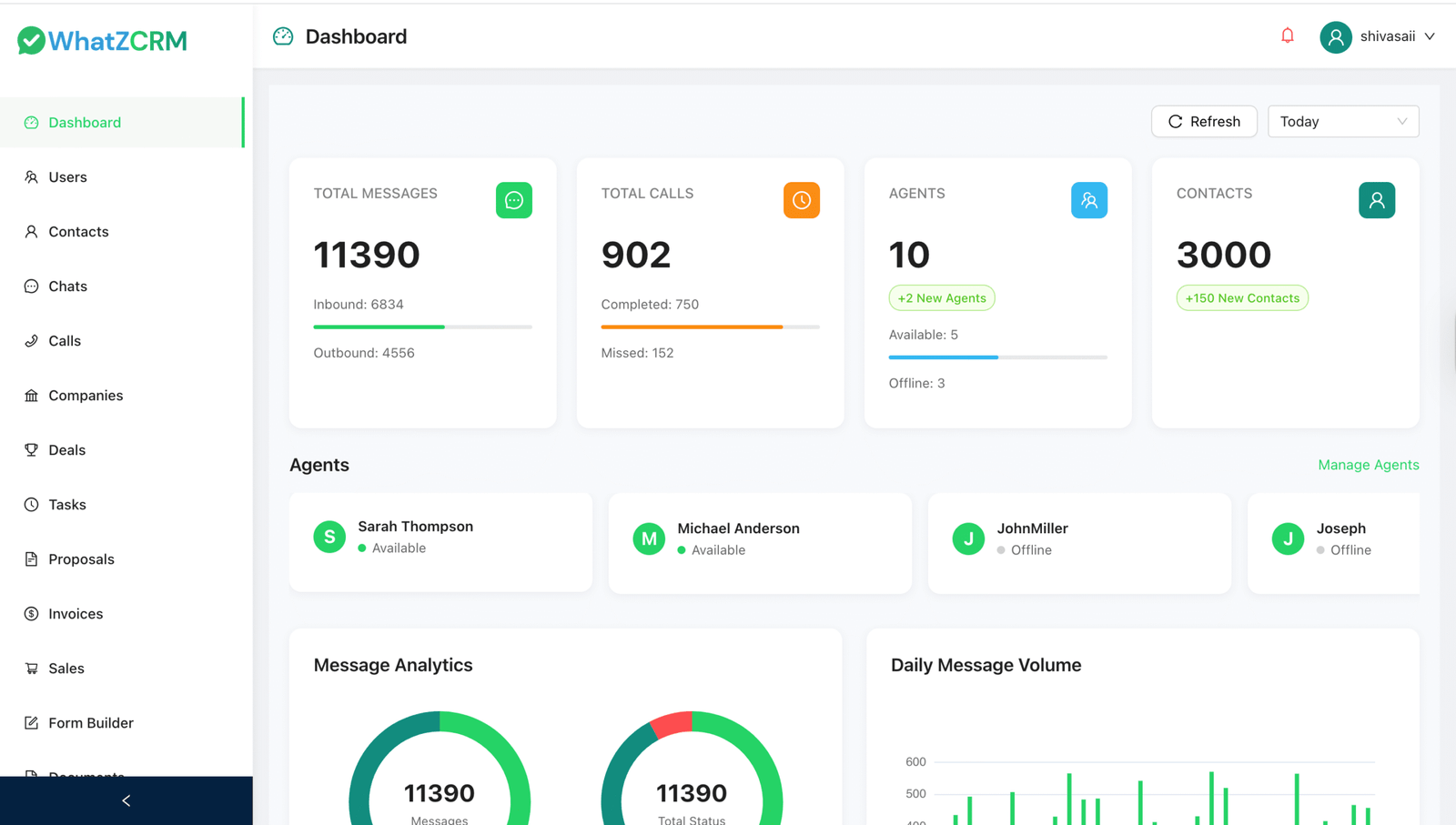
What Are the Unique Benefits of WhatZCRM?
WhatZCRM takes WhatsApp marketing to the next level. Key advantages include:
- Unified Shared Inbox – Manage all conversations in one dashboard with team assignment and chat history tracking.
- Built-In CRM & Lead Management – Automatically convert chats into structured leads, manage pipelines, and track deal stages.
- Automation & Drip Campaigns – Run automated workflows for welcome messages, follow-ups, reminders, and reactivation campaigns.
- Targeted Broadcast Campaigns – Segment audiences and send personalized messages at scale while complying with API policies.
- Conversion-Focused Features – Send proposals, invoices, and CTA buttons inside chats to speed up the sales cycle.
- Multi-Agent & Multi-Department Support – Scale with multiple agents, role-based permissions, and smart conversation routing.
- Email Marketing Integration – Send campaigns, track engagement, and manage contacts alongside WhatsApp communications.
- Analytics & Performance Tracking – Monitor engagement, response times, and agent performance to optimize ROI.
WhatZCRM doesn’t just send messages; it builds relationships, automates growth, and converts conversations into revenue.
Also Read: How WhatsApp CRM Made Simple with WhatZCRM
WhatsApp Marketing Trends That Work in 2026
To rank well and stay competitive, businesses must keep up with evolving trends. Here are the major:
- AI-Powered Chat Automation: AI chatbots handle FAQs, lead qualification, and appointment booking.
- Hyper-Personalization: Dynamic content based on behavior and purchase history.
- Conversational Commerce: Customers browse products, ask questions, and purchase within WhatsApp.
- CRM Integration: Businesses integrate WhatsApp with sales pipelines and customer databases.
- Data-Driven Campaign Optimization: Analytics dashboards help refine message timing and segmentation.
Also Read: 7 WhatsApp Marketing Trends That Businesses Can’t Ignore in 2026
To Summarize
If you’re evaluating the benefits of WhatsApp marketing, the answer is clear:
It delivers higher engagement, faster responses, stronger personalization, and better conversion rates compared to many traditional channels. In 2026, customers expect brands to communicate in the same way they talk to friends, instantly and conversationally.
A well-designed WhatsApp marketing strategy 2026, combined with automation, segmentation, and analytics, transforms WhatsApp from a messaging app into a full-scale growth engine.
For businesses serious about scaling customer engagement, lead nurturing, and sales automation, WhatsApp marketing is no longer optional; it’s a strategic necessity.