

Businesses today need faster, more personal ways to connect with customers. Emails often go unopened, SMS messages feel intrusive, and calls go unanswered. WhatsApp, on the other hand, has become the most preferred communication channel for both businesses and customers.
This is why bulk WhatsApp sender software has become increasingly popular. From promotions and reminders to lead follow-ups and announcements, businesses are using WhatsApp at scale to drive engagement and growth.
Also Read: Overview of How to Send Secure Bulk WhatsApp Messages
In this blog, we’ll explore the top 9 bulk WhatsApp sender software for business growth, key features to look for, limitations of traditional tools, and how modern platforms like WhatZCRM go beyond bulk messaging to deliver real business results.
Why Bulk WhatsApp Messaging Is Growing So Fast
WhatsApp has over 3 billion users worldwide, and messages sent on WhatsApp have significantly higher open and response rates compared to email or SMS.
Businesses use bulk WhatsApp messaging to:
- Reach thousands of customers instantly
- Send promotional offers and updates
- Share reminders, alerts, and notifications
- Re-engage cold or inactive leads
- Reduce manual follow-ups
However, sending messages in bulk is only one part of the equation. Sustainable business growth depends on how conversations are managed after the message is delivered.
What Is a Bulk WhatsApp Sender?
Bulk WhatsApp message sender software enables businesses to send WhatsApp messages to large numbers of contacts at once using approved templates, typically via the WhatsApp Business API.
These tools are commonly used for:
- Marketing campaigns
- Product launches
- Event notifications
- Payment reminders
- Customer updates
While bulk WhatsApp senders solve the problem of scale, many focus only on message delivery, not on conversation management or conversions.
How Bulk WhatsApp Sender Software Supports Business Growth
When used correctly, bulk WhatsApp sender tools can help businesses:
- Increase campaign reach instantly
- Achieve higher open and response rates
- Reduce manual outreach efforts
- Improve customer communication speed
- Generate initial interest and engagement
Industries such as e-commerce, education, healthcare, real estate, travel, and service businesses rely heavily on bulk WhatsApp messaging for customer communication.
Limitations of Traditional Bulk WhatsApp Sender Tools
Despite their popularity, traditional bulk WhatsApp sender tools have clear limitations:
- Messages are often one-way broadcasts
- No visibility into lead quality or intent
- No sales pipeline or CRM integration
- Limited automation beyond message sending
- Difficult to track conversions and ROI
- Conversations get scattered across agents
This is where businesses begin to realize they need more than just a bulk sender.
Key Features to Look for in Bulk WhatsApp Sender Software
Before choosing a tool, businesses should evaluate these essential features:
- WhatsApp Business API compliance
- Approved message templates
- Contact segmentation and tagging
- Automation and follow-up workflows
- Multi-agent inbox support
- Campaign analytics and reports
- CRM or lead management integration
A tool that combines bulk messaging with CRM and automation delivers far better results than standalone senders.
Top List Bulk WhatsApp Sender Software for Business Growth
1. WhatZCRM
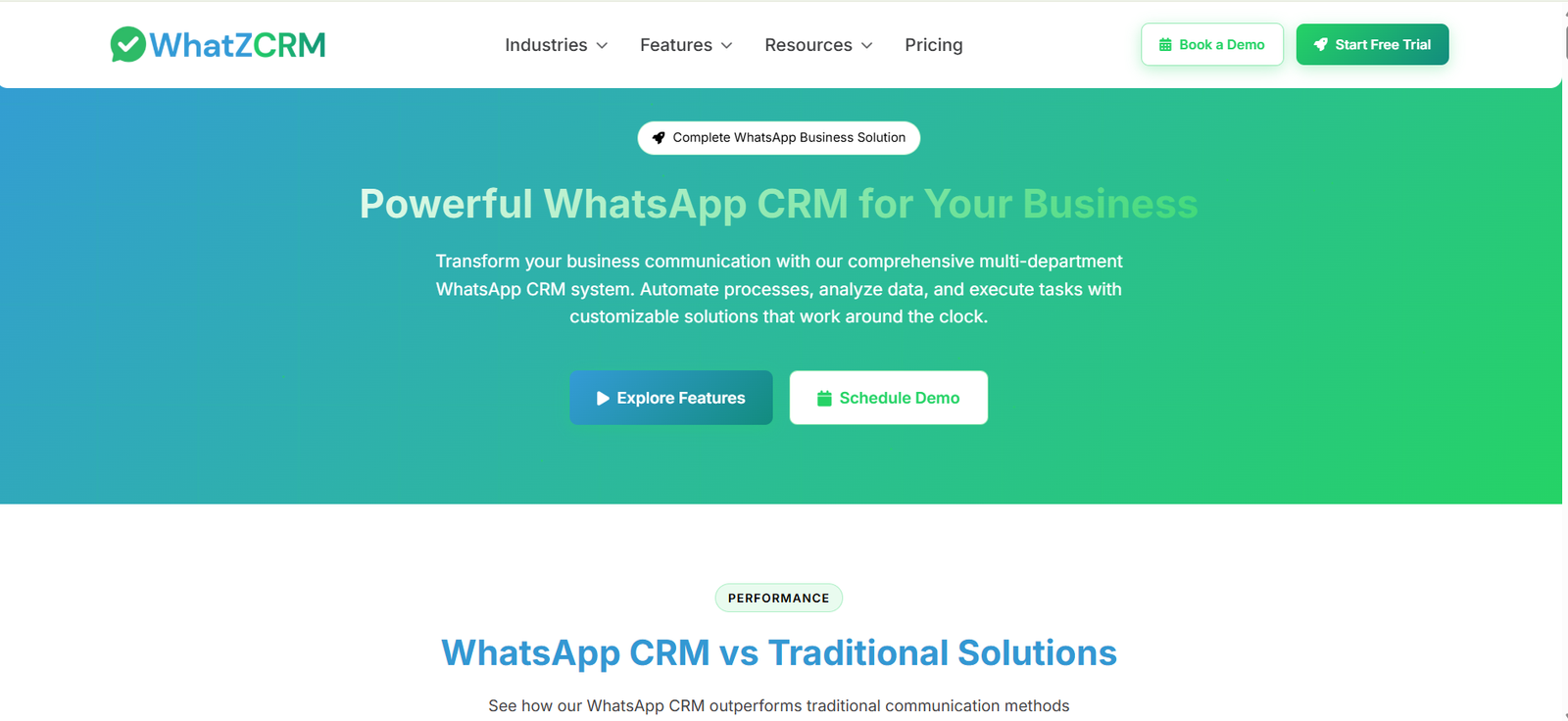
Overview: WhatZCRM is an AI-powered WhatsApp CRM that centralizes business conversations, automates workflows, and turns WhatsApp chats into qualified sales leads. Unlike traditional bulk WhatsApp tools, it combines messaging, CRM, and automation into a single platform.
Pros:
- AI-driven lead management and follow-ups
- Multi-agent inbox for team collaboration
- Sales pipeline tracking and reporting
- Broadcast campaigns with automation workflows
Cons:
- Requires onboarding to leverage full CRM capabilities
- Advanced features may be more than needed for very small businesses
2. Getgabs
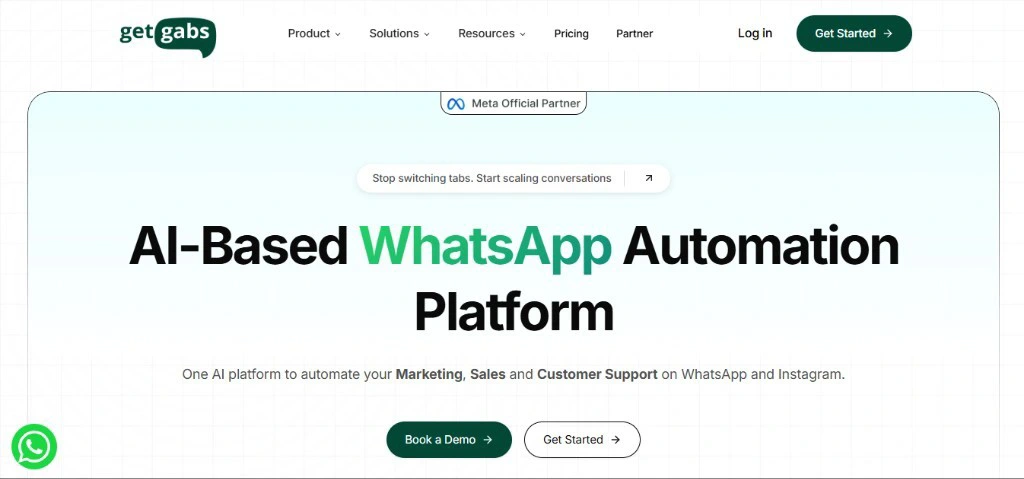
Overview: Getgabs is a powerful bulk WhatsApp sender software built on the official WhatsApp Business API. It is designed to help businesses scale conversations, automate outreach, and drive real conversions. It goes beyond just sending bulk messages by offering smart automation, campaign management, and customer engagement tools in one place. Whether you’re running promotions, nurturing leads, or handling support, Getgabs makes WhatsApp feel like a complete growth engine rather than just a messaging app.
Pros:
- Zero setup fees and no markup on meta messaging cost.
- Advanced bulk messaging with personalization options
- Automation features like AI-powered chatbots, drip campaigns, and quick replies
- Easy campaign management for marketing and lead generation
- Best for agencies, E-commerce, SMBs, and resellers
- Shopify & e-commerce automation for order updates and customer engagement
- Shared team inbox for smooth team collaboration
- CRM integration for better customer data management
- WhatsApp Chat Widget to capture and convert website visitors into leads
Cons:
- Requires API setup and approval process for full access
- May require training to utilize all functionalities
Pricing:
Basic | Plus | Pro |
$5/mo | $11/mo | $59/mo |
3. AiSensy
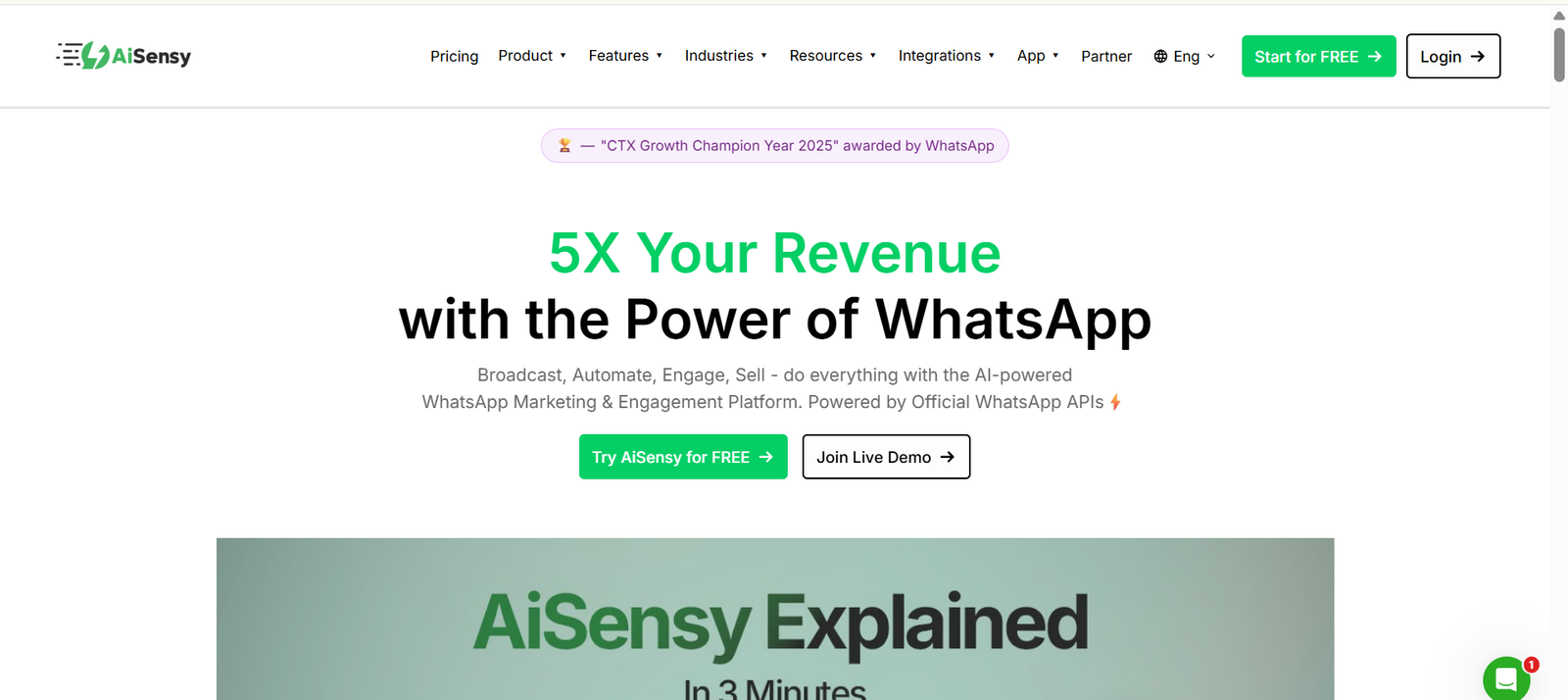
Overview: AiSensy enables businesses to send WhatsApp campaigns via the WhatsApp Business API using approved templates. It’s best for straightforward marketing blasts.
Pros:
- Easy-to-use interface for bulk messaging
- Supports WhatsApp-approved templates
- Lightweight for small campaigns
Cons:
- Limited CRM or sales pipeline features
- Automation capabilities are basic
4. Wati
Overview: WATI provides access to the WhatsApp API with broadcast messaging, team inbox, and basic automation. Suitable for SMBs managing customer conversations.
Pros:
- Multi-agent team inbox
- Supports WhatsApp automation and templates
- Works well for small to mid-sized businesses
Cons:
- Needs additional tools for full CRM or sales tracking
- Bulk campaigns are less advanced than dedicated marketing platforms
5. GetItSMS
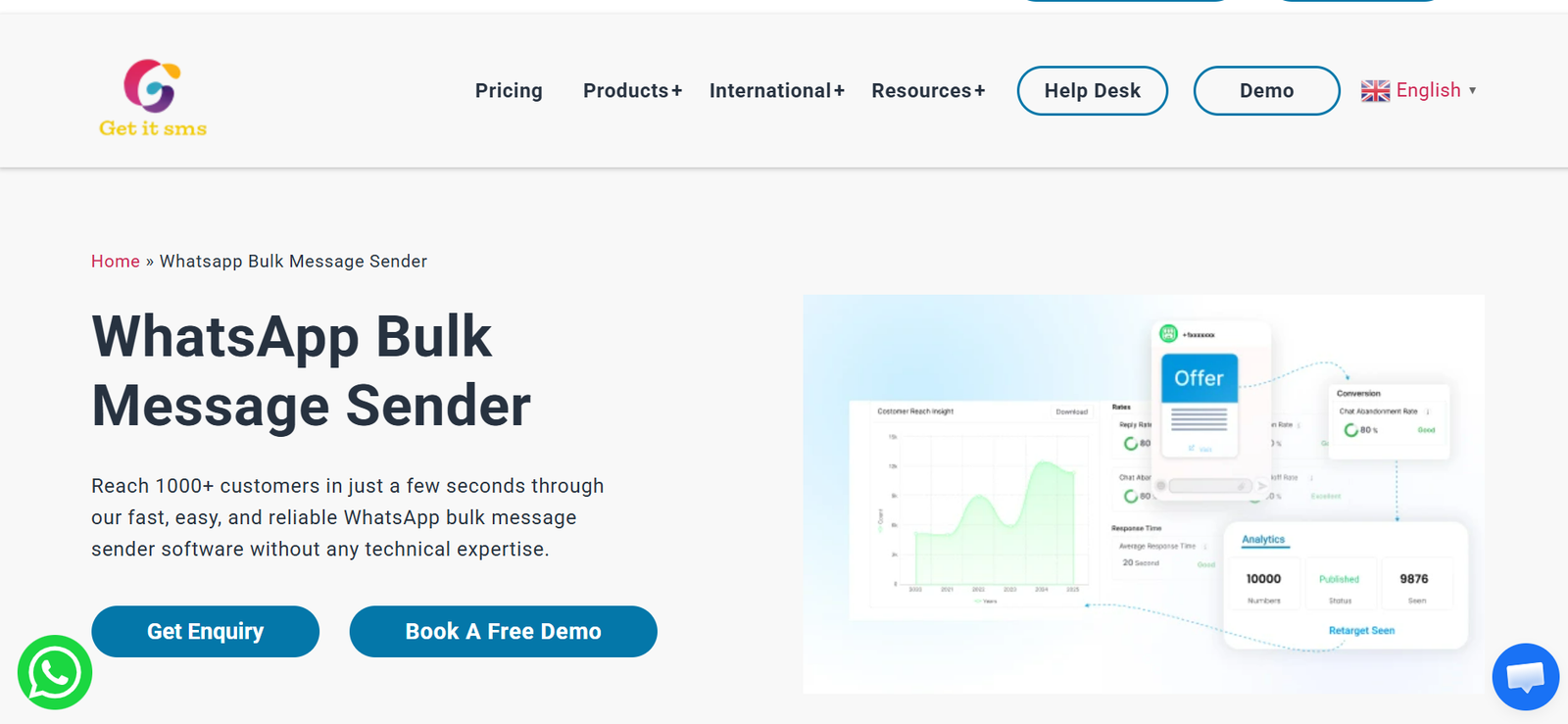
Overview: GetItSMS is a bulk WhatsApp sender software designed to help businesses automate customer communication, run personalized campaigns, and improve engagement via the official WhatsApp Business API. The platform offers a complete suite of tools for bulk messaging, chatbot automation, customer support, and lead nurturing, making it suitable for businesses looking to scale their WhatsApp marketing efforts efficiently.
From promotional campaigns and customer notifications to automated replies and team collaboration, GetItSMS helps businesses turn WhatsApp into a powerful communication and conversion channel.
Pros:
- Official WhatsApp Business API support
- Zero setup fees and no markup on meta messaging cost
- Advanced bulk messaging with personalization options
- WhatsApp broadcasting messaging
- Seamless integration with CRMs and third-party tools
- Multi-language support
- WhatsApp Automation
- Pre-built WhatsApp message templates
- AI-powered chatbot for 24/7 customer support
- Rich media Support
- Voice and SMS service along with WhatsApp
Cons:
- Advanced automation setup may take time for beginners
- An API approval process is required for full WhatsApp access
- Some advanced integrations may need technical support
Pricing:
Monthly | Half-Yearly | Yearly |
$299 | $699 | $999 |
6. Respond.io
Overview: Respond.io allows bulk messaging across WhatsApp, Messenger, Instagram, and other channels. Ideal for support-centric teams.
Pros:
- Omnichannel support for customer messaging
- Centralized inbox for multiple platforms
- Useful for customer support and service
Cons:
- Requires integrations for CRM and sales tracking
- Bulk WhatsApp messaging is not its primary focus
7. Twilio
Overview: Twilio offers complete WhatsApp API access for developers and enterprises, allowing full flexibility for messaging workflows.
Pros:
- Fully customizable API
- Scales easily for large enterprises
- Supports complex automation
Cons:
- No built-in CRM or user interface
- Requires technical expertise to implement
8. Gupshup
Overview: Gupshup enables bulk WhatsApp messaging, chatbots, and automation at scale for large organizations.
Pros:
- High-volume messaging support
- Advanced automation and chatbots
- Enterprise-level reliability
Cons:
- Complex setup for small businesses
- Less intuitive for non-technical teams
9. DelightChat
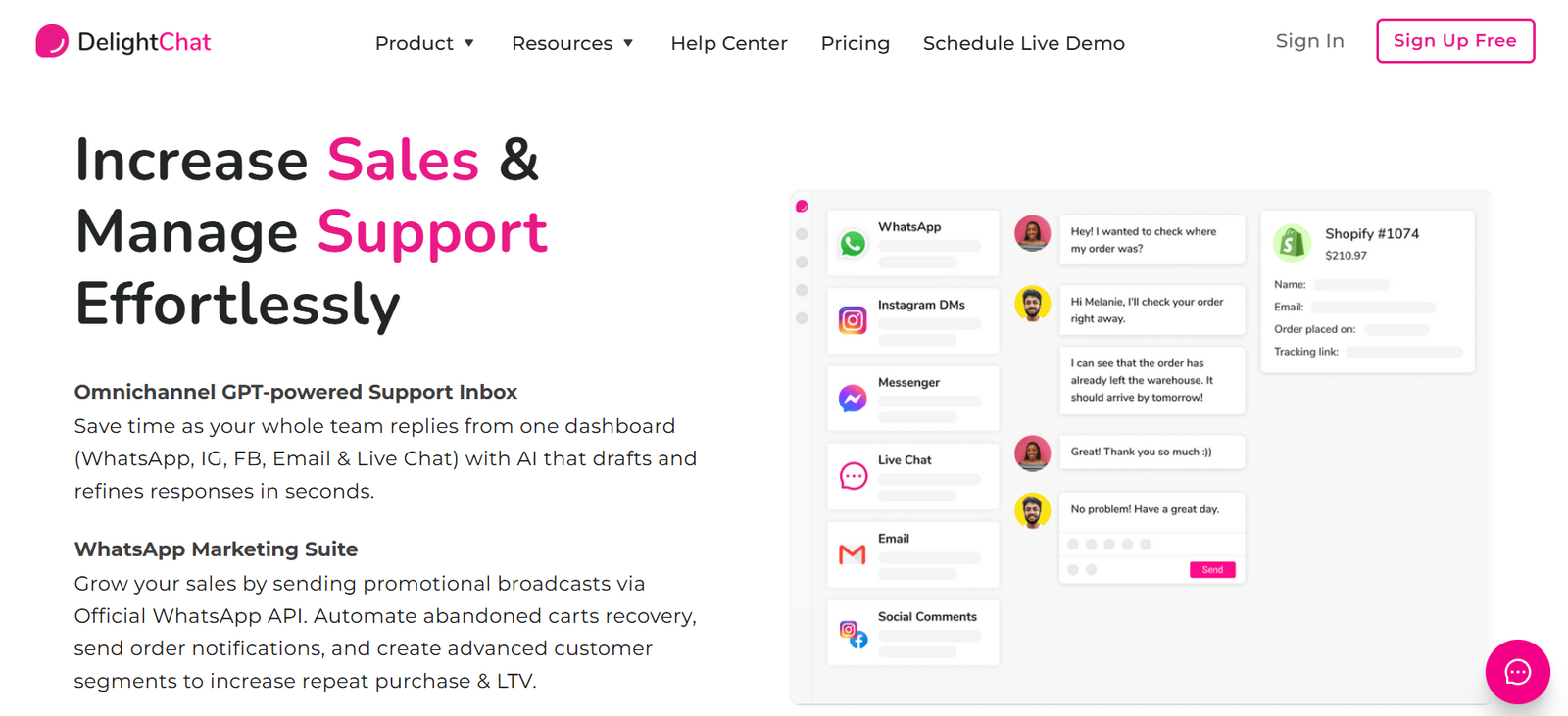
Overview: DelightChat focuses on e-commerce brands, offering WhatsApp broadcasts, customer support, and order-related messaging.
Pros:
- Ideal for online retail customer engagement
- Simple message automation for orders
- Supports a multi-agent inbox for small teams
Cons:
- Limited beyond e-commerce
- Lacks full CRM features for other business types
10. 360Dialog
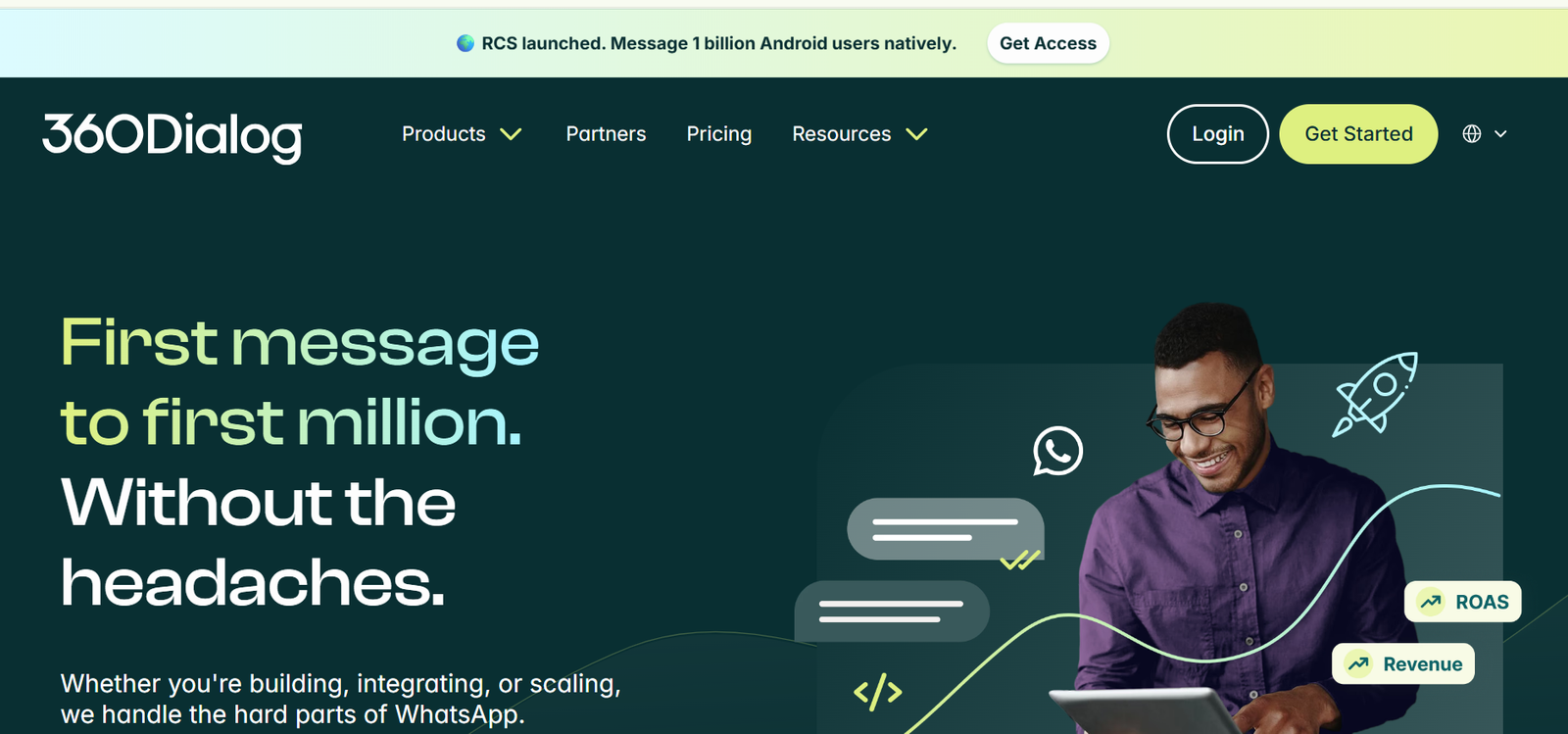
Overview: 360Dialog offers enterprise-grade WhatsApp API solutions with AI-powered automation, chatbots, and broadcast capabilities. It enables businesses to scale messaging campaigns while integrating seamlessly with existing CRM and marketing tools.
Pros:
- Fully API-based for custom workflows and automation
- Supports AI chatbots and conversational messaging
- Integration-ready for CRM, e-commerce, and marketing platforms
Cons:
- Requires technical setup and configuration
- It can be overwhelming for small businesses without dedicated technical resources
Bulk WhatsApp Sender vs WhatsApp CRM: What’s the Difference?
Bulk WhatsApp sender tools are designed to send messages. WhatsApp CRM platforms are designed to manage conversations and revenue.
Bulk sender tools focus on delivery. WhatsApp CRM focuses on outcomes.
A WhatsApp CRM like WhatZCRM provides:
- Two-way conversations
- Lead tracking and scoring
- Automated follow-ups
- Sales pipeline visibility
- Team performance analytics
This shift is critical for businesses aiming for long-term growth.
Also Read: WhatsApp Broadcast vs WhatsApp Group: Which Is Right for Business Communication
How WhatZCRM Turns Bulk Messaging into Business Growth
WhatZCRM follows a workflow-based approach instead of simple broadcasting.
A typical workflow looks like this:
- A bulk WhatsApp campaign is sent to targeted contacts
- Customers reply or engage with the message
- AI chatbot qualifies responses automatically
- Leads are tagged and assigned to sales agents
- Automated follow-ups are triggered
- Sales pipelines track deal progress
- Analytics measure campaign and conversion performance
This ensures every message contributes to measurable business growth.
Who Needs More Than a Bulk WhatsApp Sender?
Businesses that need more than just message delivery include:
- Sales-driven organizations
- High-volume lead generators
- Customer-centric service businesses
- Agencies managing multiple clients
- Teams focused on conversions and ROI
These businesses benefit far more from WhatsApp CRM platforms like WhatZCRM.
Final Thoughts
Bulk WhatsApp sender software helps businesses reach customers quickly, but real business growth comes from managing conversations, not just sending messages.
Modern businesses are moving beyond one-way broadcasts toward AI-powered WhatsApp CRM platforms that unify messaging, automation, sales, and support.
If your goal is not just to send messages but to convert conversations into revenue, exploring a smarter platform makes all the difference.
Explore how WhatZCRM works and see how AI-powered WhatsApp CRM can help your business scale conversations and drive sustainable growth.