

B2B communication has changed dramatically over the past few years. Buyers no longer tolerate slow email replies, disconnected phone calls, or delayed follow-ups. They expect immediate responses, contextual conversations, and consistent engagement across the entire sales cycle.
Yet many B2B organizations still rely on fragmented systems in which email, spreadsheets, and CRM tools operate separately from real-time messaging. This gap between speed and structure often results in missed opportunities and declining conversion rates.
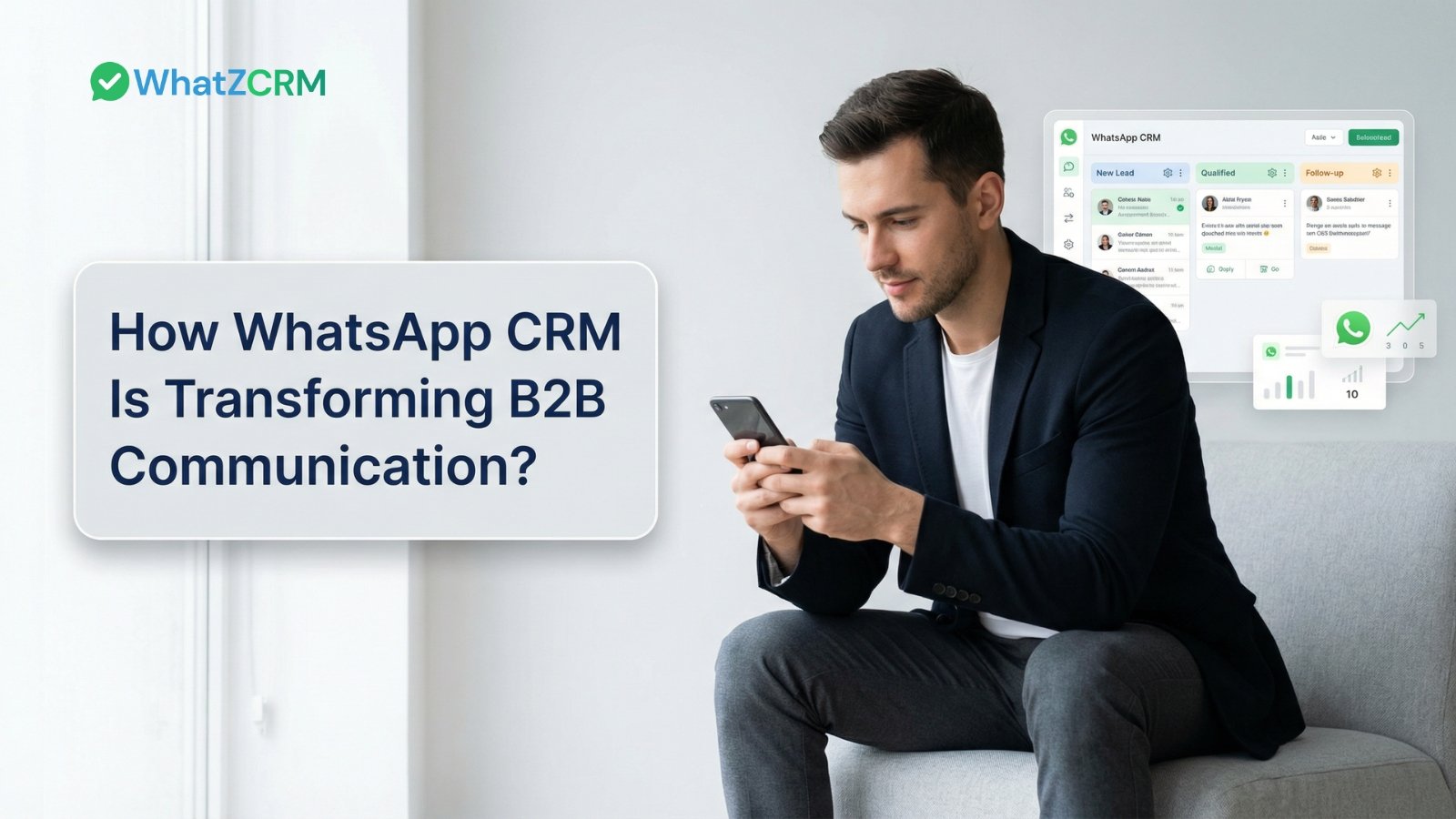
WhatsApp CRM is emerging as the bridge between instant messaging and structured customer relationship management, transforming how modern WhatsApp for B2B Communication.
What Is WhatsApp CRM?
WhatsApp CRM is a system that integrates the WhatsApp Business API with a CRM platform to centralize business conversations, automate communication workflows, and track leads in a unified dashboard.
Instead of treating WhatsApp as just a messaging app, it becomes a measurable sales and support channel. Conversations are logged, contacts are tracked, and follow-ups are automated, all while maintaining the convenience of real-time chat.
Overview About WhatZCRM?
WhatZCRM is an AI-powered WhatsApp CRM that helps businesses manage customer conversations, automate customer support, and convert WhatsApp chats into qualified sales leads using intelligent workflows.
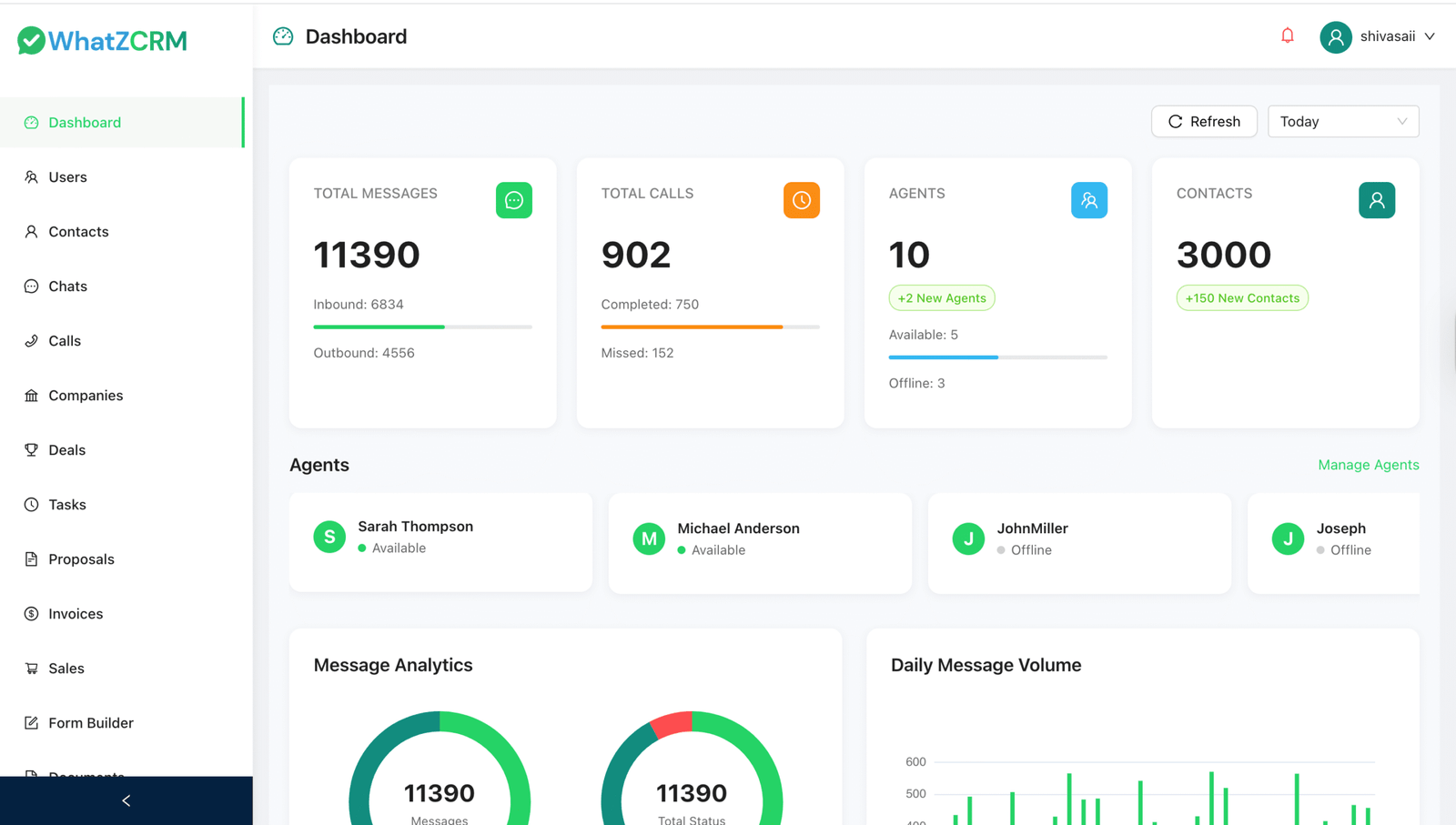
It combines messaging, automation, sales tracking, and analytics within a single platform. Rather than switching between WhatsApp and a separate CRM, teams operate within a single, structured environment where every interaction is recorded and actionable.
Why Traditional B2B Communication Models Fall Short?
Traditional B2B communication often depends on email threads, manual reminders, and disconnected CRM entries. While these systems may function individually, they rarely work together seamlessly.
Sales teams might respond quickly on WhatsApp, but the interaction never gets logged in the CRM. Support teams may resolve issues, yet sales representatives remain unaware of customer concerns. Follow-ups depend on individual discipline rather than automated processes.
In competitive B2B markets, even small delays can influence purchasing decisions. Businesses need communication systems that are not only fast but also structured and trackable.
The Growing Need for AI-Powered WhatsApp CRM in B2B
Modern B2B buyers expect immediacy without sacrificing personalization. They want quick responses, relevant information, and consistent engagement throughout the decision-making process.
An AI-powered WhatsApp CRM enables businesses to meet these expectations by combining automation with human oversight. Initial inquiries can be handled instantly, while complex discussions transition smoothly to sales or support teams. Meanwhile, every interaction becomes part of a centralized customer record.
This balance between speed and structure is what differentiates modern communication systems from outdated methods.
How WhatZCRM Centralizes and Structures Conversations
One of the most significant advantages of WhatZCRM is its ability to centralize WhatsApp communication across teams. Instead of messages being handled from individual devices, conversations appear in a shared multi-agent inbox.
Each interaction is connected to a customer profile that contains conversation history, notes, and activity timelines. This ensures continuity, especially in B2B environments where multiple decision-makers are involved.
By centralizing communication, businesses eliminate confusion, reduce response delays, and improve accountability across departments.
How WhatZCRM Automates B2B Lead Management
One of the biggest challenges in B2B communication is scattered messaging. WhatZCRM solves this by providing:
Centralized Multi-Agent Inbox
All WhatsApp messages are visible on a single dashboard. Conversations can be assigned to specific agents or departments such as Sales, Support, or Billing.
Lead & Contact Management
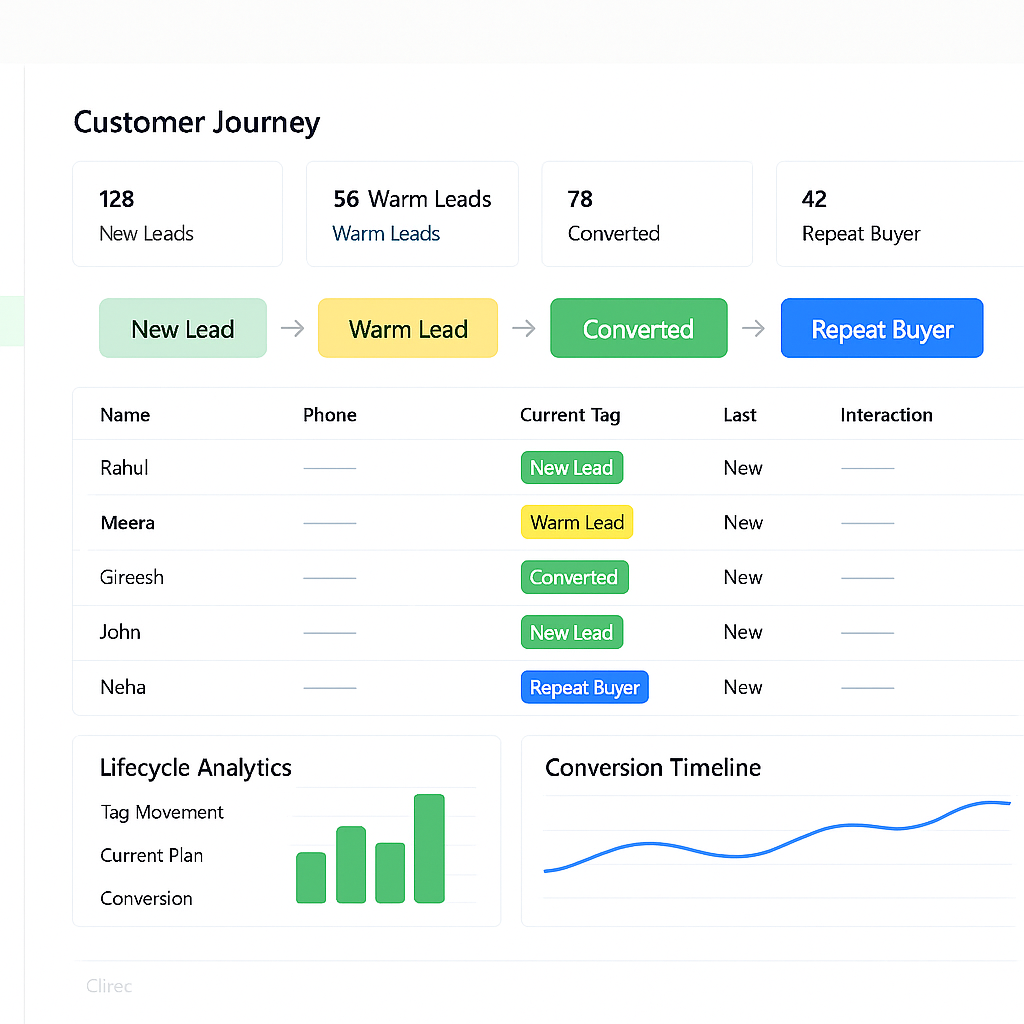
Every chat is connected to a contact profile with:
- Interaction history
- Notes
- Tags
- Activity timeline
- Tasks and reminders
Real-Time Notifications
When a new inquiry arrives, the relevant team is instantly notified. No message is missed. This eliminates manual coordination and ensures accountability.
Improving Sales and Support Collaboration
In many B2B organizations, sales and support operate in isolation. This often leads to inconsistent communication and fragmented client experiences.
With WhatsApp CRM, both teams gain visibility into shared conversation histories. If a client raises a technical concern, support updates are visible to the sales team in real time. Likewise, sales teams can monitor ongoing service interactions before approaching a client to upsell or renew.
This transparency strengthens internal coordination and ensures clients receive consistent information.
Also Read: How WhatZCRM Helps Businesses Drive Sales Growth in 2026
Driving Faster Conversions Through Real-Time Engagement
Response time plays a critical role in B2B conversions. Delays reduce engagement and allow competitors to intervene. WhatsApp CRM enables immediate interaction, helping businesses respond while the buyer’s intent is still high.
Beyond instant replies, structured tracking ensures that follow-ups are timely and personalized. Analytics dashboards provide insights into response times, engagement levels, and team performance, allowing continuous improvement of communication strategies.
When messaging is both immediate and measurable, businesses gain a clear competitive advantage.
How WhatZCRM Uses Smart Automation Without Losing Human Touch
Automation should improve efficiency, not remove personalization.
WhatZCRM balances both by offering:
- AI chatbots for initial queries
- Human agent takeover for complex discussions
- Multimedia message support (PDFs, videos, catalogs)
- Smart suggestions and quick replies
This hybrid approach ensures conversations remain natural and engaging while maintaining operational efficiency.
Also Read: Detailed Overview of Top 5 WhatsApp Automation Tools: Features, Benefits & Comparison
Who Should Use WhatsApp CRM?
WhatsApp CRM is ideal for:
- B2B sales teams managing high inquiry volumes
- Service-based businesses relying on consultation bookings
- Real estate firms handling property leads
- Healthcare providers coordinating appointments
- Educational institutions managing student inquiries
- Agencies managing client communication
Any organization that relies heavily on WhatsApp for business communication benefits from structured CRM integration.
Conclusion
B2B communication is evolving toward real-time, structured, and data-driven engagement. Businesses that continue to rely solely on fragmented emails and manual follow-ups risk losing efficiency and competitive advantage.
WhatsApp CRM transforms messaging into a strategic business channel by integrating automation, analytics, and CRM functionality within a familiar communication platform.
WhatZCRM is an AI-powered WhatsApp CRM that centralizes conversations, automates follow-ups, and enables businesses to convert WhatsApp interactions into measurable sales growth.
For organizations aiming to improve responsiveness, enhance collaboration, and scale communication intelligently, adopting an AI-powered WhatsApp CRM is becoming a strategic necessity.